Reservoir

This paper aims to establish a set of best practices for generating particle-size-distribution data from core samples.

This paper discusses the successful execution of two openhole gravel-pack completions in two Gulf of Mexico fields with depleted reservoirs.

This study explores the carbon-capture and mineralization potential of ultramafic rock powders when exposed to flue gases generated from combustion of crude oil and mesquite-derived charcoal.
-
 The authors describe the process of building multiple scenario-based models to optimize development planning in preparation for the upcoming production phase of the Ichthys field offshore Australia.
 -
The authors demonstrate how artificial intelligence and machine learning can help build a purely data-driven reservoir simulation model that successfully history matches dynamic variables for wells in a complex offshore field and that can be used for production forecasting.
-
The implementation of fishbone stimulation helped to more than double estimated well productivity and tripled the production rate in a tight carbonate reservoir well compared with conventional stimulation during initial testing.
-
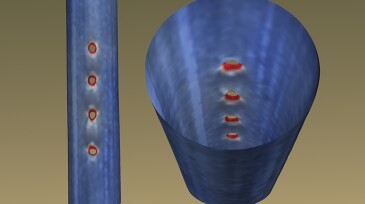
When fracturing, simply shooting all the perforations at the same spot in the casing can offer increased production at a low cost.
-
The paper describes an end-to-end deep surrogate model capable of modeling field and individual-well production rates given arbitrary sequences of actions.
-
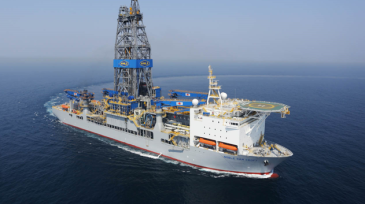
The latest success for the ExxonMobil-led consortium is also adding drillships to support a 15-well campaign in the Stabroek Block.
-
The all-stock transaction is expected to bolster the newly created operator's production profile to around 160,000 BOE/D.
-
Finding creative ways to drive down the CAPEX and discounted OPEX and define a realistic pathway and schedule to full-scale commercial operations is discussed.
-
Oil isn’t going away, but that misses the fact that a demand plateau will structurally change the industry for people and companies in the most geologically mature areas, especially the United States.
-
Operator will use polymerized water into reservoir to boost oil and gas recovery.