Risk management

With funding opportunities improving, developers and researchers are focused on shortening project learning cycles and reducing uncertainty to attract more capital and speed deployment.

The latest edition of ISO 20815 extends the petroleum industry's production assurance and reliability management framework to carbon capture, hydrogen, ammonia, and wind assets.

Panelists at the SPE Subsea Well Intervention Symposium discussed where AI is delivering value today, where risks remain, and how engineers can best determine its usefulness.
-
 Financial Fallout: For two big companies, tougher times call for tougher actions.
 -
University of Houston Energy asked 408 industry workers to gauge their companies’ response to the global pandemic and economic downturn.
-
Exploration commitments are expected to dwindle in the current market environment.
-
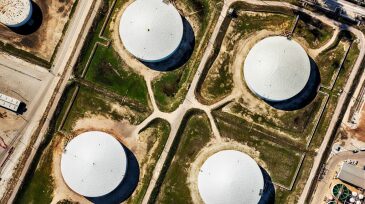
The potential leasing of space in the SPR comes after the DOE’s plans to buy crude oil were suspended. US oil inventory stockpiles stand at a 10-month high.
-
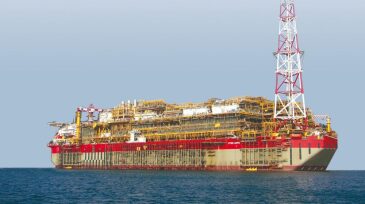
The methodology has proven to be a powerful and effective tool for major-risk management. This paper describes how this technique has been used for the management of major risks associated with production at Total’s Akpo floating production, storage, and offloading facility.
-
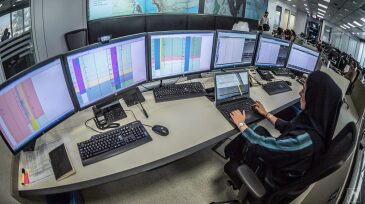
Saudi Aramco, BP, and Schlumberger pride themselves on staying at the forefront of digital technology development and deployment. But an equally daunting challenge for the industry heavyweights is keeping their ever-expanding digital systems secure.
-
The transaction is planned to be structured as a spin-off of TechnipFMC’s onshore/offshore segment to create SpinCo and RemainCo. The separation is expected to be completed in the first half of 2020.
-
This paper describes a comprehensive optimization-under-uncertainty work flow that combines a simulation-based approach with semiautomatic work flows and high-speed computers to facilitate the process of decision-making for investors.
-
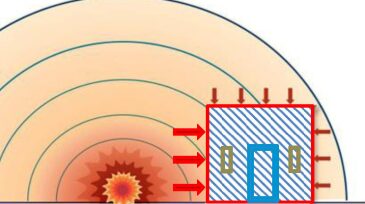
Buildings that are manned or house critical equipment ideally will be a safe distance from potential explosions. Maintaining the required stand-off distance, however, is not always possible. This paper discusses challenges and best practices for blast protection of plant buildings.
-
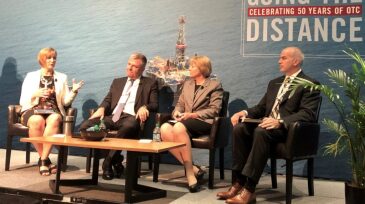
Digitalization and new technologies are disrupting old practices and shaping a new safety landscape for the oil and gas industry. At OTC, a panel sponsored by the Center for Offshore Safety looked at the effects of some of these new technology trends.