Risk management

With funding opportunities improving, developers and researchers are focused on shortening project learning cycles and reducing uncertainty to attract more capital and speed deployment.

The latest edition of ISO 20815 extends the petroleum industry's production assurance and reliability management framework to carbon capture, hydrogen, ammonia, and wind assets.

Panelists at the SPE Subsea Well Intervention Symposium discussed where AI is delivering value today, where risks remain, and how engineers can best determine its usefulness.
-
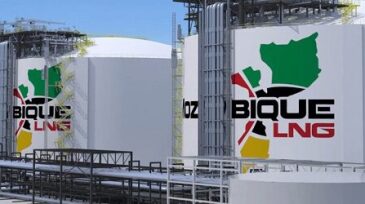
 The South African Development Community has agreed to send up to 3,000 troops to contain Mozambique’s terrorist insurgency after Total declared force majeure and evacuated all personnel from its Mozambique LNG worksite.
 -
Although they only make up about 10% of total US production, the vast majority of onshore US conventional wells are stripper wells. What are the implications for buyers seeking assets?
-
This paper presents a novel matrix to identify environmental and social elements relevant for the development of oil and gas projects. It also proposes a useful traffic light and multivariate analysis methods for the evaluation of these elements.
-
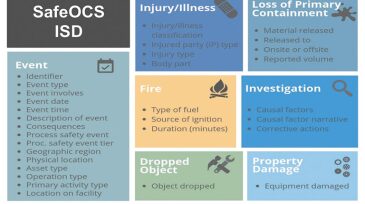
In the aftermath of the Deepwater Horizon oil spill, the oil and gas industry, regulators, and other stakeholders recognized the need for increased collaboration and data sharing to better identify safety risks and address them before an accident occurs.
-
A global trend has developed toward the application of risk-based assessment (RBA) techniques for managing environmental risks and considering potential effects of produced-water (PW) discharge.
-
The complete paper discusses Equinor’s operation planning tool, developed to present planners with the technical conditions of a platform, identify potentially dangerous combinations of concurrent activities, and propose learnings from 8 years of incident recordings.
-
This essay explores the overall trend toward an oil and gas governance regime increasingly focused on development risks and analyzes the growing divergence of state responses. In doing so, it assesses the conditions that have challenged previously universal legal doctrines.
-
Two intelligence groups share similar views on how the fallout from the COVID-19 pandemic has impacted OFS companies’ valuations and operations.
-
FPSO sanctioning is at a minimum and few opportunities remain for FPSO suppliers to find new work and redeploy their vessels. Suppliers may be forced to accept day rate reductions in order to keep their vessels working.
-
A technical synopsis of major considerations for unconventional wells facing prolonged shut-ins. The review includes deciding factors for kill fluid selection and risks of incompatible fluid mixing.