Risk management

With funding opportunities improving, developers and researchers are focused on shortening project learning cycles and reducing uncertainty to attract more capital and speed deployment.

The latest edition of ISO 20815 extends the petroleum industry's production assurance and reliability management framework to carbon capture, hydrogen, ammonia, and wind assets.

Panelists at the SPE Subsea Well Intervention Symposium discussed where AI is delivering value today, where risks remain, and how engineers can best determine its usefulness.
-
 What may have been a sense of uneasy security in countries around the world that relied on imported oil and gas has been shaken off. Russia’s invasion of Ukraine, and its role in supplying natural gas to the EU, highlights just how quickly the sourcing of fuel can or must change.
 -
A transatlantic task force will be formed to oversee the EU’s goal of reducing Europe’s dependence on Russian fossil fuels and strengthen European energy security.
-
Regarding the long-term risks to our industry and a decreasing role of oil and gas in the energy transition in the future, I see an opportunity for companies to expand into new business segments and our members into new career opportunities.
-
Why you should be cautious about using today’s higher inflation rates in your asset-retirement calculation.
-
Chevron said it is returning production to normal after a week of antigovernment protests caused logistics disruptions in Kazakhstan’s principal oil-producing region, Mangastau, which borders the Caspian Sea.
-
In this paper, a complete safety-management approach and a contingency plan are developed for carbon dioxide waterless fracturing operations.
-
After more than 2 decades of talk, multiple millions of dollars in investments, and a decade’s worth of joint industry projects, operators are starting to get on board with electrification as the base case for subsea solutions.
-
The complete paper provides tools useful for decision-makers to prevent adverse pipeline incidents caused by human action, poor facility performance, accidents, emergencies, and external events.
-
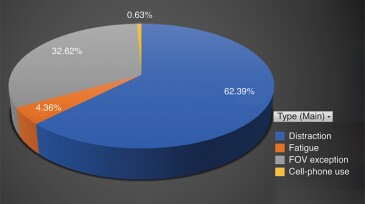
The authors’ objective is to understand further how technology can support the prevention of driver fatigue and to explore driver beliefs related to fatigue and the technology designed to assist in fatigue avoidance.
-
As European majors push hard and fast to decarbonize energy and move into new and renewable sources, US majors are focusing on cleaner, more efficient hydrocarbons. Which approach and which companies will gain the upper hand?