Risk management

With funding opportunities improving, developers and researchers are focused on shortening project learning cycles and reducing uncertainty to attract more capital and speed deployment.

The latest edition of ISO 20815 extends the petroleum industry's production assurance and reliability management framework to carbon capture, hydrogen, ammonia, and wind assets.

Panelists at the SPE Subsea Well Intervention Symposium discussed where AI is delivering value today, where risks remain, and how engineers can best determine its usefulness.
-
 Companies in the petroleum industry, from exploration and production, to transportation, refining, and distribution, operate around the clock. This paper intends to raise awareness on the impact of fatigue in the petroleum industry and recommend a framework for fatigue risk management.
 -
Culture, not controls, will drive the next phase of industry safety evolution, said presenters at a recent HSE conference.
-
This new conceptual framework for capital-allocation management, known as advanced risk and capital-allocation management (ARCAM), aims to synchronize risk, strategy, and capital decision modeling to provide better visibility of future performance of capital-investment opportunities.
-
The use of data-intensive decision making and smart risk-management solutions has resulted in the improvement of the ethical foundations underlying the industry. These digital tools and machine-based cognitive processes for risk-avoidance have also helped restore the public’s trust in the industry.
-
The memorandum on integrated and unified risk management in the petroleum industry aims to help companies continue developing their own activities in this area.
-
Oil and gas entrepreneurs need more than just a brilliant idea to attract investment, and investors have to offer more than just money.
-
The US re-imposing sanctions on Iran has prompted Total to consider dropping its stake in a project designed to bolster output from the world’s largest gas field.
-
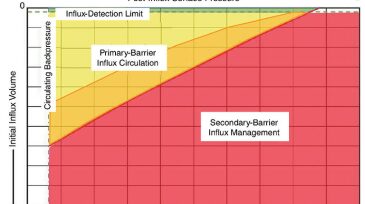
The influx-management-envelope (IME) concept is an advanced, innovative way to assess influx conditions in managed-pressure-drilling (MPD) operations, offering an improved tool for the decision-making process.
-
Indy Chakrabarti, senior vice president of product management and strategy at Emerson Automation Solutions talks about developments in software solutions for the oil and gas industry.
-
Operators, vendors, academics, and government officials offered an abundance of views and recommendations on cyber-threats to the industry during the American Petroleum Institute’s recent Cybersecurity Conference.