

Robotics/unmanned systems

Shell has demonstrated drone-in-a-box operations from its Mars floating production unit, becoming the first operator in the region to secure FAA approval for self-approved offshore beyond-visual-line-of-sight flights. JPT Senior Technology Editor Jennifer Pallanich visited Shell Technology Center Houston to see the system in action.

From AI-enabled walking rigs to subsea drones and autonomous inspection robots, robotics is rapidly moving from pilot projects to field deployment. The technology promises not only greater efficiency but also a fundamental shift in how the industry approaches safety and asset management.
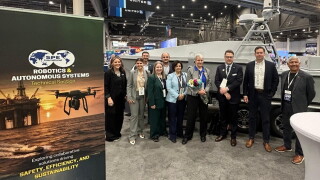
This article from the SPE Robotics and Autonomous Systems Technical Section (RASTS) explores the insights shared at the recent Offshore Technology Conference (OTC) in Houston about autonomous systems and their role in the industry's future.
-
 Autonomous underwater vehicles (AUVs) have demonstrated their capabilities during the search for Malaysian Airlines flight 370 in the Indian Ocean.
 -
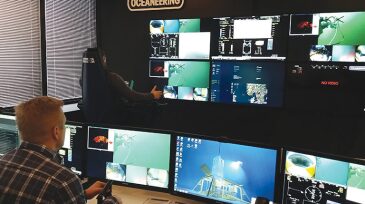
Operators for remotely operated vehicles will be getting more remote in the future as land-based control begins to become a reality.
-
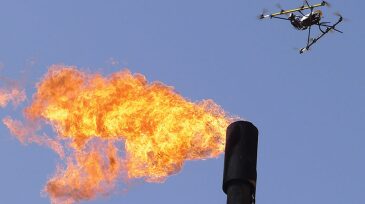
Use of unmanned aerial vehicles to monitor pipeline networks for theft and other issues is discussed.
-
Saudi Aramco is on a mission to increase the amount of seismic data that it collects by fourfold, while reducing costs and acquisition time by half of what it spends today.
-
Robotic submarines, capable of operating by themselves thousands of feet underwater for months or perhaps years at a time, are under development as the vanguard of tomorrow’s subsea oil and gas fields.
-
Unmanned aircraft are finding their place in the oil and gas industry by providing aerial geologic modeling to address reservoir-related challenges and making inspections safer.



Page 16 of 16