Safety

The SPE Human Factors Technical Section has been officially renamed the SPE Safety Technical Section. The new name better reflects how safety is managed today across interconnected areas like human performance, risk management, and system resilience.

The company said its frequency of serious incidents was down at the end of the year from its levels at the end of 2024.
This paper examines how real-time monitoring can improve both incident prevention and emergency response in the oil and gas industry. Drawing from real-world examples and case studies, it provides practical strategies for implementing this technology effectively.
-
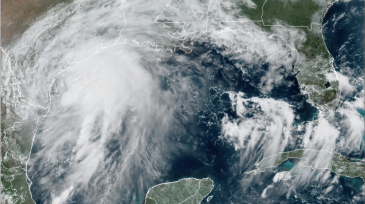
 Shell moves nonessential personnel off its Perdido deepwater platform as a result of Tropical Storm Nicholas.
 -
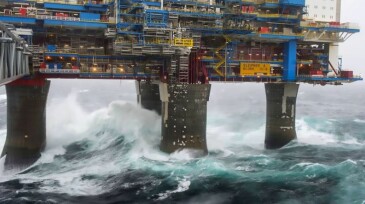
Strong storms can trigger steep, breaking waves that slam into platform and wind turbines with tremendous force. Scientists at the Norwegian University of Science and Technology and SINTEF are studying the behavior of offshore structures subjected to these kinds of waves. Their goal is to increase safety at sea.
-
A fire at Ku-Maloob-Zaap killed five and sidelined more than 400,000 BOPD.
-
Search for the missing workers continues as the Mexican state oil company investigates the cause of this latest blaze.
-
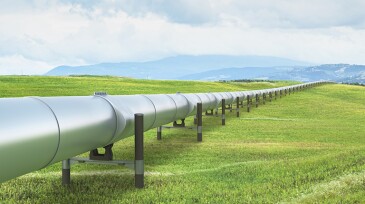
A subsidiary-owned pipeline near Marmon, North Dakota, spilled more than 700,000 bbl of produced water over a period of almost 5 months in 2014–2015.
-
The complete paper provides tools useful for decision-makers to prevent adverse pipeline incidents caused by human action, poor facility performance, accidents, emergencies, and external events.
-
Delivering clear and consistent communication is a core component of crisis-response management. The complete paper describes an oilfield service company’s crisis-communication strategy implemented in response to a hurricane devastation of an area where more than 12,000 employees live and work.
-
Behavior-based programs have proven effective in reducing workplace incidents because safety becomes a collective responsibility shared by all employees. In the complete paper, the authors describe a program known as Human Performance.
-
Poor health and safety behaviors pose a challenge to drivers of trucks and commercial vehicles and to the safety of motorists and pedestrians. In Nigeria, an operator partnered with medical personnel to demonstrate the positive effects of a human performance and care agenda on driver performance, engagement, behavior, and road safety.
-
At a time when the world is dealing with the COVID-19 virus, it is a safe assumption that we are frequently thinking about our health. This selection of technical papers highlights the topic as addressed at the 2020 SPE Virtual International Conference on Health, Safety, Environment, and Sustainability.