

Offshore/subsea systems
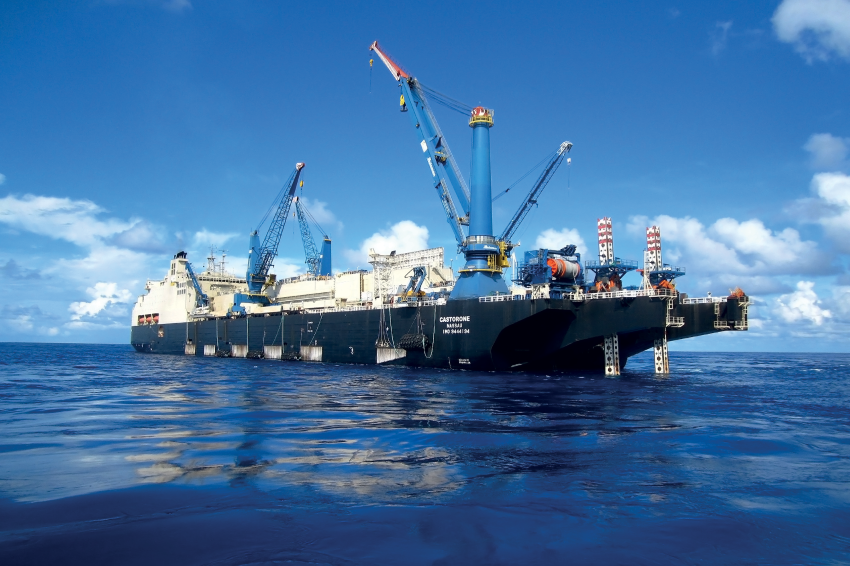
The $5.1 billion ultradeepwater project is Angola’s first integrated cross-block development and sits at the top of Azule’s Southern African portfolio.

Equinor and its partners’ investment in the Troll West Increased Gas Recovery North (TWIN) project aims to unlock around 11 Bcm of additional natural gas from the Troll field, with first production targeted as early as 2028.

In the fourth development phase, a planned tieback would connect resources from two North Sea discoveries to existing infrastructure at the Johan Sverdrup field, pending project sanction.
-
 Production delivered by the subsea artificial lift system will equal that obtained by drilling two new wells, according to BP.
 -
This paper describes the use of encapsulated polymer technology to address the issues of shear degradation and injectivity integrity faced in the application of polymer flooding in an offshore development context.
-
New technical papers suggest advanced robotic systems may not be far away from broad adoption for a large share of offshore inspection and intervention.
-
This paper describes the successful deployment of flexible coiled tubing technology in an oil-producing well of the offshore Frade field in Brazil’s Campos Basin.
-
While often associated with smaller discoveries, subsea tiebacks are playing a growing role in contributing to the broader energy mix.
-
Saipem can begin early subsea engineering on ExxonMobil’s Longtail project in Guyana under a Limited Notice to Proceed, while the operator awaits final investment decision and government sign-off.
-
The Offshore Technology Conference will honor the winners of the 2026 Spotlight on New Technology Award on Monday, 4 May, at NRG Center in Houston. Seventeen groundbreaking innovations, from AI-powered geotechnics and autonomous well construction to next-generation subsea systems and drilling intelligence, demonstrate how bold ideas are translating into real-world gai…
-
The North Sea project, which is sending production to the nearby Ivar Aasen platform, came online 9 months ahead of schedule.
-
Equinor said it found between 14 million and 24 million BOE with its most recent exploration well in the Polynya Tubåen prospect.
-
BP sanctioned development of the Kaskida in 2024, with first oil from the high-pressure project expected in 2029.




Page 1 of 44