Offshore/subsea systems

The Absheron gas field expansion will supply additional natural gas to Azerbaijan’s domestic market and support its export commitments to Turkey, allowing Baku to stay focused on meeting its gas export obligations to Europe.

This paper presents a flexible, highly cost- and energy-efficient method of gas separation and CO₂ capture from many different gas mixtures with a large range of CO₂ concentrations.

This work introduces a novel predictive methodology combining historical metocean data with real-time riser analysis for shallow water dynamically positioned rig operations.
-
 Anyone selling something new for offshore exploration and production has to be able to answer a simple question from customers, “How can we save some money?” For Norwegian oil companies, change is coming in many forms: steel, sensors, software, and standards.
 -
The need to economically invest in offshore exploration and production has inspired a wide range of innovations in Norway to drastically reduce costs, which can lead to changes in offshore operations around the world.
-
A new method for accessing and cementing hard-to-reach spaces around complex offshore wells.
-
The BC-10 asset, located in deep water offshore Brazil, produces heavy oil in the range of 16 to 24 °API. In this article, two examples of production optimization for this field will be provided (further examples are available in the complete paper).
-
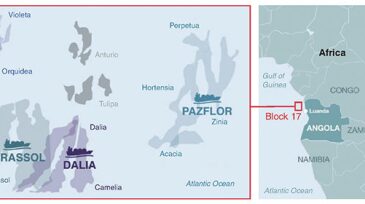
This paper describes the CLOV deepwater megaproject in Block 17 offshore Angola, which cost USD 8.4 billion to first oil.
-
Moving to higher-capacity wellhead systems for high-pressure and high-temperature (HP/HT) environments will require a larger mandrel and conductor-casing size.
-
To help lower costs of offshore projects, DNV GL has launched initiatives focused on the use of composite components.
-
A RPSEA project identified the gaps in technology that are the most pressing for multiphase-flow measurement.
-
Deepwater production has become more reliant on the integrity of subsea, umbilical, riser, and flowline (SURF) systems. A JIP explored cost-effective inspection and maintenance options.
-
Douglas-Westwood (DW) expects the expenditure of subsea vessel operations to begin a gentle upswing after next year.