Offshore/subsea systems

The Absheron gas field expansion will supply additional natural gas to Azerbaijan’s domestic market and support its export commitments to Turkey, allowing Baku to stay focused on meeting its gas export obligations to Europe.

This work introduces a novel predictive methodology combining historical metocean data with real-time riser analysis for shallow water dynamically positioned rig operations.

This paper documents the testing, integration, and field deployment of a metal expandable packer used as an openhole toe isolation plug in a deepwater well under high-pressure, high-temperature conditions.
-
 Eni conducted a research project to explore the maturity of new technologies to enable economical development of deepwater prospects with tieback distances longer than 50 km and 150 km, respectively, for oil and gas fields.
 -
This case study describes how gas condensates within a subsea tieback system behave very differently to condensed water from a wet-gas system and therefore a pseudo dry-gas system needs to be configured differently for gas-condensate developments.
-
A subsea water-treatment system designed to leverage space availability, steady temperatures, lower bacteria levels, and other natural benefits of the seabed environment was successfully installed during pilot testing at the Ekofisk field offshore Norway.
-
Aimed at streamlining manufacturing processes and significantly reducing costs, the practice provides standardized operator requirements that DNV GL says will ensure consistency in the fabrication of subsea pressure retaining equipment such as wellheads, manifolds, and jumpers.
-
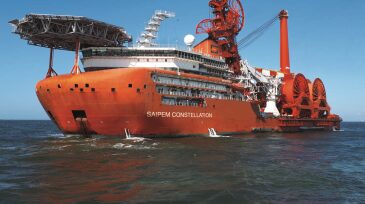
Bloomberg reports that Saipem is seeking to bulk up and weather an industry downturn. A potential deal could create an oilfield service giant with more than $12.4 billion in revenue.
-
Before the dream of a “subsea factory” can come true, a group of North Sea companies will need to see if the required technology is economically feasible to build.
-
Technip Energies will work on a backlog comprising more than 50% in LNG-related business. Retaining the TechnipFMC name, RemainCo will generate nearly 90% of its revenue outside the US and Canada.
-
Subsea advancements in the works include longer tiebacks, an underwater drone that lives on the seafloor, and a robotic manifold capable of actuating dozens of valves. Do these new capabilities, born of necessity, signal a sea change in industrywide technology development?
-
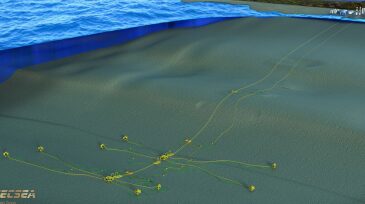
The company’s new approach is designed to cut the time required to generate optimal subsea field layouts.
-
After seeing a significant increase in the price level for subsea equipment, Equinor says it is realizing the ways in which standardized subsea templates help build financial competitiveness. The new standard allowed for the installation of 14 templates in one month.