Unconventional/complex reservoirs

The deal adds over 1,000 potential drilling locations and almost doubles oil production for Houston-based Magnolia.

Average output reached 13.6 million BOPD, extending a period of sustained growth that has kept the US at the forefront of global oil production.

The events will be co-located 3–5 May 2027 at Reliant Park in Houston, Texas.
-
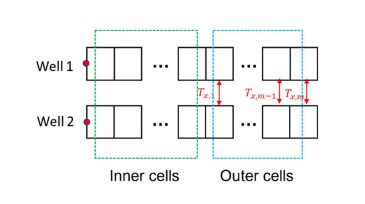
 The authors of this paper propose a hybrid approach that combines physics with data-driven approaches for efficient and accurate forecasting of the performance of unconventional wells under codevelopment.
 -
Despite tens of thousands of potential candidates and the proven upsides, the unconventional industry has largely overlooked refracturing—possibly due to the way it’s discussed.
-
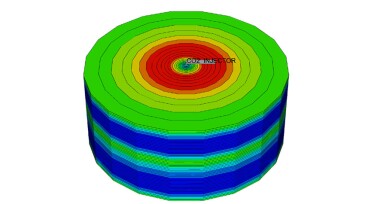
This paper develops a deep-learning work flow that can predict the changes in carbon dioxide mineralization over time and space in saline aquifers, offering a more-efficient approach compared with traditional physics-based simulations.
-
This paper describes the potential, challenges, and opportunities of using a modified steam-assisted gravity drainage configuration in the Mukhaizna heavy oil field in suboptimal operating conditions.
-
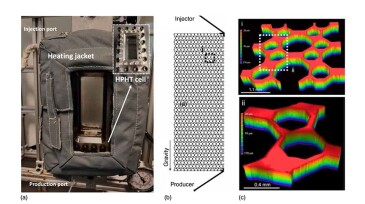
This study aims at understanding the effect of a surfactant known as a high-temperature emulsifying agent as an additive to the steam-assisted gravity drainage process and the possibility of forming oil-in-water emulsions.
-
This paper describes the implementation of a hybrid technology of cyclic steam stimulation and foam into the heavy oil field development plans of the Middle Magdalena Valley basin in Colombia.
-
SponsoredExpanding its portfolio of high-tier technologies, TAQA develops a high-performance perforation-plugging patented product.
-
Devon Energy along with petroleum engineering consulting and software firm Whitson and cloud computing company Snowflake developed a system to monitor the dynamics of 5,000 wells.
-
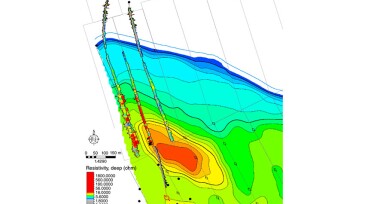
This paper presents the mitigation of drilling challenges encountered in the Niger Delta through a technique that relates shale resistivity to shale porosity and vertical effective stress to predict pore pressure.
-
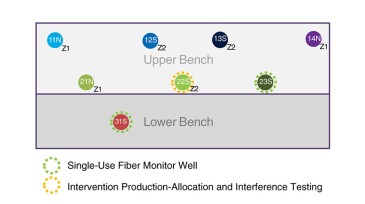
The authors integrated azimuths and intensities recorded by fiber optics and compared them with post-flowback production-allocation and interference testing to identify areas of conductive fractures and offset-well communication.