Unconventional/complex reservoirs

The deal adds over 1,000 potential drilling locations and almost doubles oil production for Houston-based Magnolia.

Average output reached 13.6 million BOPD, extending a period of sustained growth that has kept the US at the forefront of global oil production.

The events will be co-located 3–5 May 2027 at Reliant Park in Houston, Texas.
-
 The Research Council of Norway’s $118,000 grant will support development of longer fishbone laterals to raise production while lowering carbon footprints.
 -
Houston-based Chord is set to see its daily output increase to a basin-leading average of 287,000 BOE/D.
-
Long the subject of rumored deals, Endeavor Energy is being snapped up at last in a deal valued at $26 billion.
-
New studies examine whether two innovative well designs should have a bigger role to play in the race to get more value out of tight rock reservoirs.
-
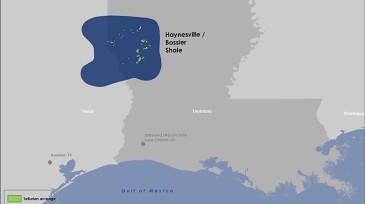
The company looks to focus its efforts on getting phase one of its Driftwood LNG up and running by shedding Haynesville acreage.
-
Executives from BKV Corp. share why the mid-sized natural gas producer is diving headfirst into carbon sequestration projects and why you should too.
-
Chevron has some new ideas on how to get more oil for less cost out of shale wells in their early years.
-
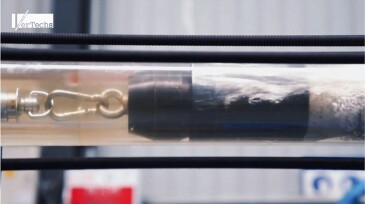
Casing deformations are common in the south-west shale regions of China and the Middle East, where the widespread use of 5.5-in., 26- and 26.8-lb/ft casing is the norm. In these regions, the majority of frac plugs are designed with an outer diameter (OD) of 4.055 in. or slightly larger, which frequently encounter restrictions resulting in the loss of bottomhole assemb…
-
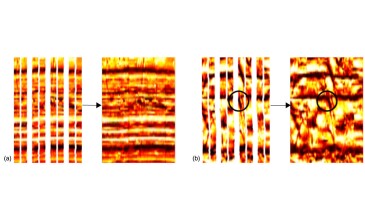
The authors of this paper propose an artificial-intelligence-assisted work flow that uses machine-learning techniques to identify sweet spots in carbonate reservoirs.
-
This paper describes an effort to use multiple technologies to better understand an Arkoma Basin reservoir and the interdisciplinary relationship between the reservoir’s subsurface hazards and a stimulation treatment.