Unconventional/complex reservoirs

The deal adds over 1,000 potential drilling locations and almost doubles oil production for Houston-based Magnolia.

Average output reached 13.6 million BOPD, extending a period of sustained growth that has kept the US at the forefront of global oil production.
The events will be co-located 3–5 May 2027 at Reliant Park in Houston, Texas.
-
 The main objective of this paper is to investigate the relationship between strain change and pressure change under various fractured reservoir conditions to better estimate conductive fractures and pressure profiles.
 -
The authors of this paper describe a seismic reprocessing campaign for an Egyptian oil field that had yielded poor seismic data.
-
Oil giant looks to shed Canadian tight-oil assets as it moves to wrap up merger with rival Hess.
-
At more than $140 billion, M&A market activity in the fourth quarter delivered the best showing of the year.
-
In its 2024 outlook, Enverus expects 3-mile-long lateral sections to become a new normal in the Permian and suggests the budding geothermal and lithium arenas may be the real deal.
-
Two of the most established US independents are combining to form a natural gas powerhouse that will be given a new name later this year.
-
Startup company LongPath Technologies has received conditional federal financing to install 1,000 methane detection towers spanning multiple US states.
-
Houston-based independents will combine to form a company with a production total above 500,000 BOE/D and valued at $21 billion.
-
An engineered approach to fracture growth in hydraulic fracturing highlights the successful execution of H2S prevention strategies in North Dakota’s Williston Basin.
-
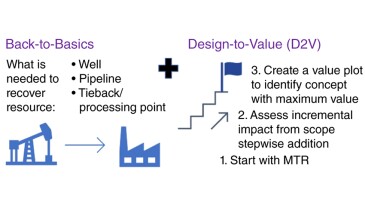
This paper describes a revamped methodology for field-development strategy formulation, particularly for marginal hydrocarbon resources, by shifting the mindset toward designing with an aim to value in order to improve project viability.