

Unconventional/complex reservoirs

This work applies fuzzy logic, a well-established artificial-intelligence technique, to quantitatively assess connectivity between injectors and producers in a giant presalt field in the Santos Basin of Brazil.

Disposal wells remain the lowest-cost solution for produced water, but concerns over seismicity and long-term sustainability are accelerating interest in alternatives.

With a strong presence across US shale in the Bakken, Anadarko Basin, Powder River Basin, and the Permian, Continental Resources is expanding into Argentina’s Vaca Muerta shale as the privately held E&P giant pursues international growth.
-
 In this second article of a series covering water management in hydraulic fracturing (HF) in unconventional resources, the properties and characteristics of the flowback fluids are discussed, together with the general categories of technologies that are best suited to treat them.
 -
Recent industry activities have turned their focus to the areas of liquid-rich shale (LRS) and light tight oil (LTO) along with unconventional tight and shale gas.
-
Unconventional gas is poised to enter its Golden Age and to effect positive global change if it can meet three challenges. Consider the 7 billion people on Earth who use energy each day.
-
Many different completion techniques, such as vertical-well multiseam completions and multiple lateral wellbores drilled into a single coal seam, have been used to develop coalbed methane (CBM) reservoirs.
-
This paper presents a pragmatic approach to frame, evaluate, and compare appraisal strategies in resource plays.
-
As oil companies have moved to more-marginal reservoir targets, application of conventional techniques has often yielded disappointing results, and tighter zones are often abandoned for more-promising target intervals.
-
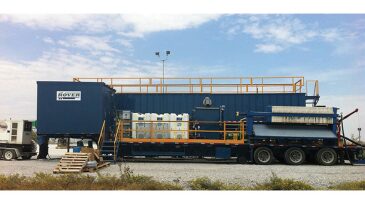
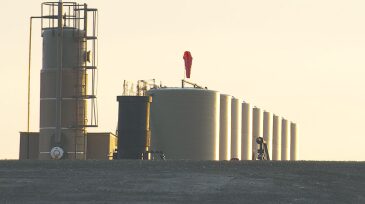
The rapid growth in the development of unconventional shale resources has changed business-as-usual for onshore production equipment manufacturers and suppliers.
-
Drilling, completing, and fracturing of unconventional-formation wells in North America have become commonplace for producing natural gas. It is less common to drill, complete, and fracture treat multiple lateral branches from a single main wellbore.
-
A recent webinar discussed current technologies to enable reuse of produced water in gas and oil shale developments.
-
Industry proponents and many leading academic institutions agree that natural gas is the safest, cleanest-burning bridge fuel. One risk in the development of this resource involves the inevitable leakage of methane.


Page 69 of 70