Unconventional/complex reservoirs

This paper documents the testing, integration, and field deployment of a metal expandable packer used as an openhole toe isolation plug in a deepwater well under high-pressure, high-temperature conditions.

This paper aims to establish a set of best practices for generating particle-size-distribution data from core samples.

This paper discusses the successful execution of two openhole gravel-pack completions in two Gulf of Mexico fields with depleted reservoirs.
-
 This paper proposes a multidomain approach to tackle petrophysical and geomechanical aspects of a fracture system governing the carbonate layer of an exploration well in Kuwait to assess producibility and qualification for stimulation.
 -
This paper proposes a data-driven proxy model to effectively forecast the production of horizontal wells with complex fracture networks in shales.
-
SponsoredQuickly identifing the right strategies for a well or pad can overcome operational challenges. These cost-effective and easy-to-use solutions help operators achieve improved production rates with less manpower.
-
The US onshore business is looking flat at the moment, though these sorts of predictions are prone to sudden shifts.
-
Dos Caminos joint venture additions will be capable of delivering 2.0 Bcf/D of natural gas.
-
Private-equity producer adds over 160,000 acres in Wyoming’s Powder River Basin oil play.
-
As the demand for energy continues to increase, so does the sociopolitical demand that these resources be produced in a sustainable way. This reflective thought has defined this month’s selection of technical papers, each speaking to a different facet of this feature’s theme: unconventional reservoir development for a sustainable energy transition.
-
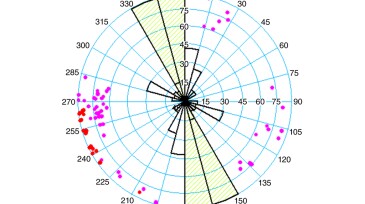
This paper describes natural fractures and their effect on hydrocarbon productivity in the Vaca Muerta shale formation.
-
The objective of this study was to establish an efficient optimization work flow to improve vertical and areal sweep in a sour-gas injection operation, thereby maximizing recovery under operation constraints.
-
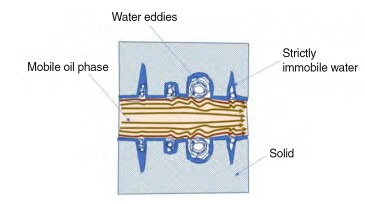
The objective of this paper is to present a fundamentals-based model of three-phase flow consistent with observation that avoids the pitfalls of conventional models such as Stone II or Baker’s three-phase permeability models.