Unconventional/complex reservoirs

The deal adds over 1,000 potential drilling locations and almost doubles oil production for Houston-based Magnolia.

Average output reached 13.6 million BOPD, extending a period of sustained growth that has kept the US at the forefront of global oil production.
The events will be co-located 3–5 May 2027 at Reliant Park in Houston, Texas.
-
 The first delivery of shale gas in the UAE marks a major milestone toward its goal of reaching 1 Bcf/D by 2030. It also signals the expansion of hydraulic fracturing in the UAE’s conventional fields.
 -
Saudi Aramco’s papers on new well technology offer glimpses at the challenges of developing its unconventional gas resources.
-
Engineers thrive on making more from less, and this month’s paper selections highlight efforts to improve the efficiency of gas-production operations throughout the world.
-
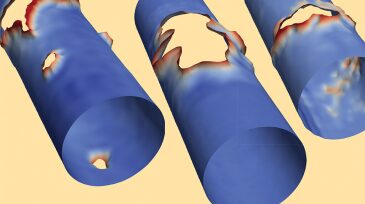
When a plug gets stuck in a well, consider the cause. Often stuck fracturing tools are a warning sign of casing trouble. Companies that have investigated plug problems have been surprised by the findings.
-
With reduced new unconventional well activity, practices such as frac-hit mitigation—pressurization of parent wells during child-well fracture stimulation—have become increasingly important to reduce parent-well proppant cleanouts as well as to maximize production from both parent and child wells.
-
The source of gummy, damaging polymer gunk that has flowed from Oklahoma oil wells is becoming clear, and one of the lessons learned is that shale plays require petroleum engineers to learn more about chemistry.
-
The Pennsylvania-based producer will leave Louisiana where profiting from tight-gas fields has proven difficult and focus on its legacy assets in the Marcellus Shale.
-
The complete paper presents a solution that assesses tight matrices and natural fractures at a level not previously achieved. At the tight-matrix level, advanced nuclear spectroscopy is carried out with a new pulsed-neutron device that achieves simultaneous time- and energy-domain measurements.
-
Black Mountain executives outlined the key criteria they used to determine why Western Australia was a prime location for private-equity investment when looking at international unconventional plays.
-
URTeC 2020’s opening plenary session panel shared insights into how the shale industry can scale technology, fiscal restraint, and social responsibility into a sustainable business case for a new energy landscape.