Unconventional/complex reservoirs

This paper aims to establish a set of best practices for generating particle-size-distribution data from core samples.

This paper discusses the successful execution of two openhole gravel-pack completions in two Gulf of Mexico fields with depleted reservoirs.

By integrating experimental and mathematical modeling approaches, this work aims to advance the understanding of sand-detachment dynamics and formation instability under varying saturation conditions.
-
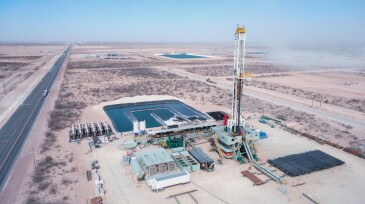
 Producers in the biggest US oil basin have signaled that they intend to seize on $100/bbl oil prices.
 -
This paper summarizes the integrated technical learnings from the successful application of the installation of autonomous outflow control technology in a new long horizontal injector well.
-
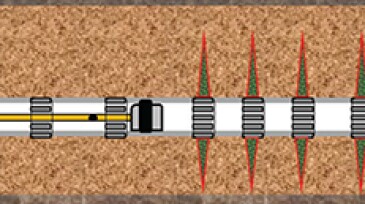
This paper will cover the most-common types of horizontal multistage fracturing completion systems, with a primary focus on unconventionals.
-
New research from Hess offers compelling evidence that two layers of tight rock can be treated as one and how passive wells can become oil producers.
-
This paper describes how a better understanding of the connection between the well and the reservoir through use of fiber-optic sensors can improve reservoir simulation models, decision-making, and well-performance evaluation.
-
In this study, the application of electrical resistance heating on multilateral wells is studied to illustrate the enhanced physical and economic benefits of the method.
-
The combined company will control almost 1 million acres in the Williston Basin and daily production over 165,000 BOE/D.
-
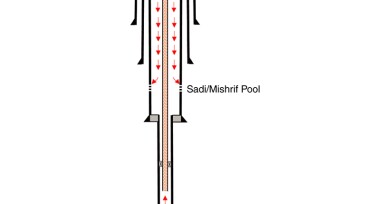
The authors discuss a production strategy in which high-gas/oil-ratio crude can be injected into the upper oil reservoirs with partial pressure depletion to achieve production enhancement and synergy among reservoirs.
-
The paper provides information to engineers for selecting high-viscosity friction reducers and describes a methodology for evaluating damage potential and proppant transport.
-
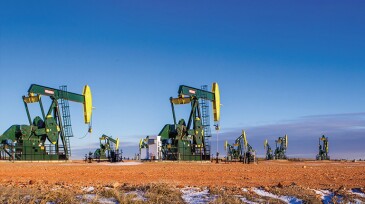
The principles behind unconventional wells lead to production profiles very different from conventional wells. High initial-production rates drop to much lower rates in a matter of months or a few years. How many in the US are currently considered low-production-rate wells?