Unconventional/complex reservoirs

This paper aims to establish a set of best practices for generating particle-size-distribution data from core samples.

This paper discusses the successful execution of two openhole gravel-pack completions in two Gulf of Mexico fields with depleted reservoirs.

By integrating experimental and mathematical modeling approaches, this work aims to advance the understanding of sand-detachment dynamics and formation instability under varying saturation conditions.
-
 The gas-focused producer said it will turn its attention to drilling programs on its Haynesville acreage.
 -
SponsoredUnconventional wells produce massive amounts of data across a multitude of systems. Bringing all this data together increases efficiency, speeds screening, enhances smart decision-making, and ultimately returns greater production. Learn how PetroVisor can help.
-
This paper describes a technology with the capability to map and detect lithology changes ahead of the bit in real time.
-
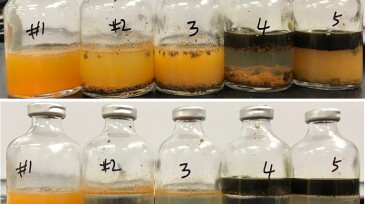
Friction reducers play multiple critical roles in fracturing. A challenge in selecting the best one for the job is the growing evidence that performance varies, but objective performance measurements are lacking.
-
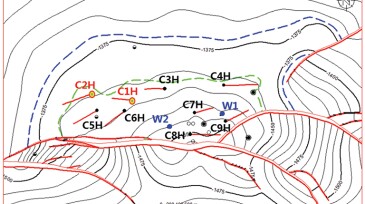
The paper describes an integrated work flow to apply autonomous inflow-control devices successfully in an offshore heavy-oil reservoir with significant uncertainty in remaining oil thickness and water/oil contacts.
-
This paper details new technologies and work flows implemented for Australian offshore wells to improve drilling efficiency while managing associated risks.
-
The paper demonstrates the application of an interpretable machine-learning work flow using surface drilling data to identify fracable, brittle, and productive rock intervals along horizontal laterals in the Marcellus shale.
-
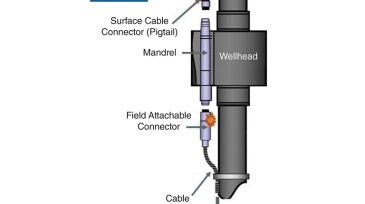
This paper describes the findings of a root-cause analysis of wellhead-penetrator failures in Canadian steam-assisted gravity-drainage operations and the mitigation measures taken.
-
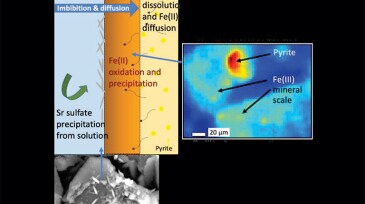
The obsession with better hydraulic fracturing has steadily pushed on shale production in year one, but the decline remains steep. Chemistry could help explain, and perhaps extend, the short productive life of these wells.
-
The authors develop and apply a laboratory protocol mimicking leakoff, shut-in, and flowback processes to evaluate the effects of fracturing-fluid additives on oil regained permeability.