Unconventional/complex reservoirs

This paper aims to establish a set of best practices for generating particle-size-distribution data from core samples.

This paper discusses the successful execution of two openhole gravel-pack completions in two Gulf of Mexico fields with depleted reservoirs.

By integrating experimental and mathematical modeling approaches, this work aims to advance the understanding of sand-detachment dynamics and formation instability under varying saturation conditions.
-
 The agency updated its methodology and production volume estimates to factor increasing production from new, emerging plays as well as older plays that have rebounded thanks to drilling advancements.
 -
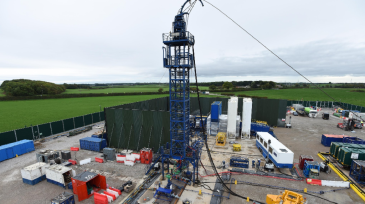
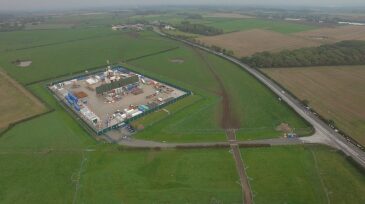
UK’s first horizontal shale well has yielded positive results after an initial flow test. But further testing—and fracturing of a second well—will have to come amid a continuation of UK’s stringent regulations on induced seismicity.
-
Electromagnetic images can show where water flows during a hydraulic fracture. A test in the Anadarko Basin showed a fault there was a bigger hazard than expected.
-
The country continues to step up its delivery of shale gas, but has a long ways to go to meet the government's target.
-
This paper studies the technical and economic viability of this EOR technique in Eagle Ford shale reservoirs using natural gas injection, generally after some period of primary depletion, typically through long, hydraulically fractured horizontal-reach wells.
-
Vaca Muerta production is on the upswing. Will increasing activity propel the Argentine play to the ranks of US shale? Data suggest it is both already there and has a ways to go.
-
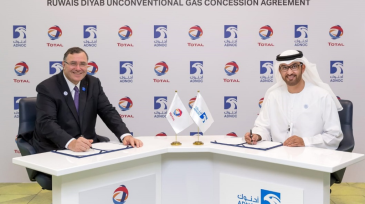
The French major will become operator of the Ruwais Diyab concession, and ADNOC says additional companies are lining up to partner on the emirate’s other unconventional areas.
-
The upcoming event will provide the shale sector with a venue to share new learnings and approaches meant to overcome one of its greatest subsurface challenges.
-
Small quantities of gas and water are flowing to the surface from the UK’s first horizontal shale well—just days after operator Cuadrilla paused injection work for a second time amid earthquakes.
-
Does better data lead to better outcomes for one or even for all? High-quality data have become a resource in themselves, to be traded and leveraged for personal gain.