Unconventional/complex reservoirs

This paper documents the testing, integration, and field deployment of a metal expandable packer used as an openhole toe isolation plug in a deepwater well under high-pressure, high-temperature conditions.

This paper aims to establish a set of best practices for generating particle-size-distribution data from core samples.

This paper discusses the successful execution of two openhole gravel-pack completions in two Gulf of Mexico fields with depleted reservoirs.
-
 This paper highlights nontraditional methods to cure oil-based-mud losses in horizontal wells drilled in unconventional plays.
 -
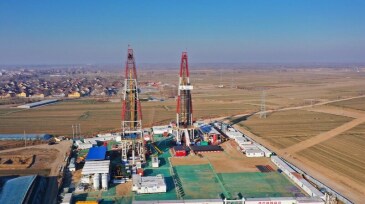
The company credited its theory of shale oil enrichment for the significant increase in the quantity of proven reserves at the field.
-
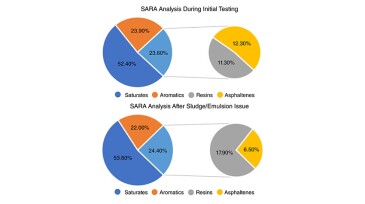
This work investigates the root cause of strong oil/water emulsion and if sludge formation is occurring within the reservoir using a robust integrated approach.
-
Advanced tracer technology was deployed in Oklahoma to analyze production across lateral well sections.
-
The era of refracs as mere experiments is long gone; today, they’re a strategic necessity fueling portfolio growth.
-
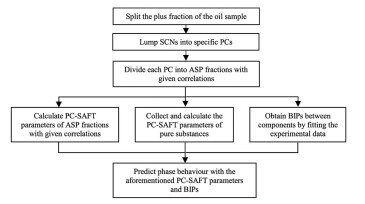
In this work, a perturbed-chain statistical associating fluid theory equation of state has been developed to characterize heavy-oil-associated systems containing polar components and nonpolar components with respect to phase behavior and physical properties.
-
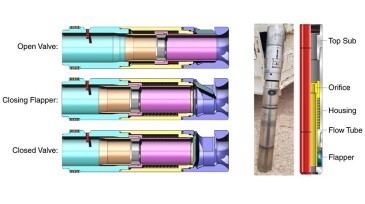
This paper aims to present thoroughly the application of subsurface safety injection valves in extremely high-temperature environments.
-
Argentina’s YPF forecasts the $3 billion oil pipeline and export terminal will carry 180,000 B/D when it goes onstream in 2026.
-
The new joint venture aims to apply US expertise to unlock Turkey's domestic unconventional resources, helping it to achieve its goal of energy independence and to become a regional hub and major exporter of LNG.
-
The supermajor believes oil and gas will continue to play a major role in the global energy mix over the next 25 years.