Unconventional/complex reservoirs

Disposal wells remain the lowest-cost solution for produced water, but concerns over seismicity and long-term sustainability are accelerating interest in alternatives.

This work applies fuzzy logic, a well-established artificial-intelligence technique, to quantitatively assess connectivity between injectors and producers in a giant presalt field in the Santos Basin of Brazil.

With a strong presence across US shale in the Bakken, Anadarko Basin, Powder River Basin, and the Permian, Continental Resources is expanding into Argentina’s Vaca Muerta shale as the privately held E&P giant pursues international growth.
-
 As Africa’s top oil producer, Libya is ramping up momentum—offering 22 exploration areas and welcoming BP back to Tripoli with a major deal.
 -
This month’s selections of unconventional technology articles investigate the factors affecting productivity and performance and highlight the need for effective strategies to enhance performance and mitigate impairment issues.
-
As US shale potentially stares at a production plateau, operators and service providers are turning to smarter tools to extend the life of aging plays.
-
The service giant shares how its new technology can sense rock properties 50 ft ahead of the bit in horizontal wells.
-
This study aims to thoroughly assess the influence of various completions, fracturing stimulation, and intrinsic reservoir properties affecting the productivity of 10 major unconventional plays while uncovering insights and trends unique to each play.
-
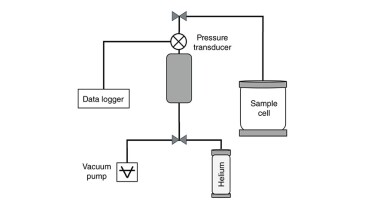
This paper introduces new methods to perform reliable permeability and saturation-dependent relative permeability measurements in organic-rich mudrock core samples using a pressure-decay setup.
-
This paper investigates condensate-banking effects on well performance by conducting field-modeling studies on Delaware Basin deep Wolfcamp condensate producers using compositional simulation models with hydraulic fractures.
-
Secondary and tertiary efforts are critical for sustaining the productive lives of unconventional plays.
-
Viper Energy is acquiring Sitio Royalties Corp. and its more than 25,000 net acres of royalty interests across major US shale plays.
-
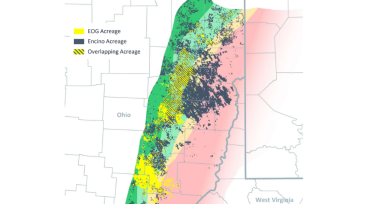
Extensive acreage overlap and existing operational collaboration drove the acquisition decision.