Unconventional/complex reservoirs

Disposal wells remain the lowest-cost solution for produced water, but concerns over seismicity and long-term sustainability are accelerating interest in alternatives.

This work applies fuzzy logic, a well-established artificial-intelligence technique, to quantitatively assess connectivity between injectors and producers in a giant presalt field in the Santos Basin of Brazil.

With a strong presence across US shale in the Bakken, Anadarko Basin, Powder River Basin, and the Permian, Continental Resources is expanding into Argentina’s Vaca Muerta shale as the privately held E&P giant pursues international growth.
-
 Few things are more essential to the now global hydraulic fracturing revolution than access to fresh water, yet this dependency use has raised environmental concerns and operational challenges.
 -
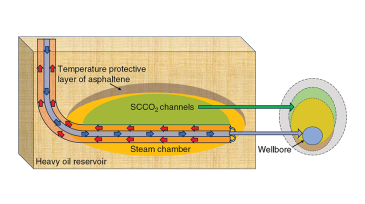
This paper presents a comprehensive model of geothermal exploitation for depleted deep heavy oil reservoirs through supercritical CO₂ injection.
-
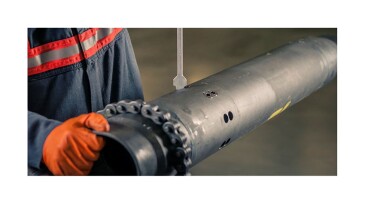
This paper discusses the development of a multientry, multistage fracturing system and its advantages over traditional openhole multistage fracturing solutions.
-
The Midland, Texas-based operator said the deal hands it the biggest remaining target in the Midland Basin side of the Permian Basin.
-
Industry leaders champion collaborative solutions as essential for overcoming fracturing limitations.
-
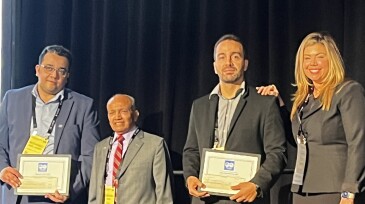
Three graduate students have received the 2025 SPE Hydraulic Fracturing Technology Conference and Exhibition Outstanding Graduate Student Award.
-
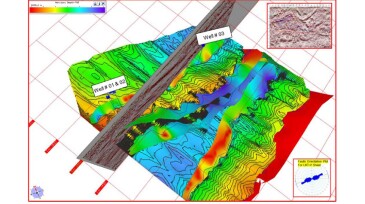
The main goal of this research work was to determine subseismic faults and fracture corridors and their characteristics, including density and orientation, for a Paleocene fractured carbonate reservoir.
-
The authors write that, by wireline formation testing of a sandstone formation adjacent to a sand/shale laminated reservoir in the Weizhou shale-oil region of the Beibu Gulf, key reservoir information can be directly obtained.
-
This paper presents a complete digital workflow applied to several greenfields in the Asia Pacific region that leads to successful deep-transient-testing operations initiated from intelligent planning that positively affected field-development decisions.
-
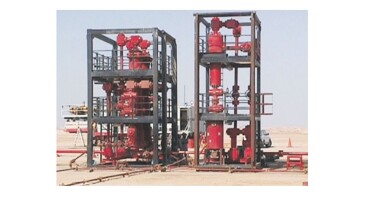
This study introduces a cleanup- and flowback-testing approach incorporating advanced solids-separation technology, a portable solution, equipment automation, improved metallurgy, and enhanced safety standards.