Water management

The startup company’s Midland Basin demonstration plant, located in the Permian Basin, takes a major step toward commercialization by proving its direct lithium extraction technology can refine battery-grade lithium carbonate from produced water under multiple 24/7 production cycles.
This paper presents an approach to the identification, selection, and implementation of initiatives for sustainable water management, withdrawal reduction, and water valorization.

Disposal wells remain the lowest-cost solution for produced water, but concerns over seismicity and long-term sustainability are accelerating interest in alternatives.
-
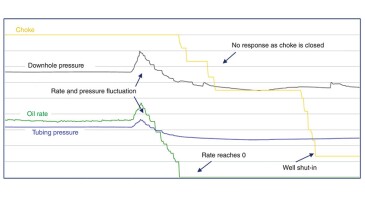
 The authors of this paper discuss how intelligent completions in the Gulf of Mexico have allowed for increased production, reduction in operating expenses, enhanced overall reservoir recovery, and improved safety and environmental performance.
 -
The paper aims to address the challenges and opportunities in managing produced water and its contaminants in the petroleum industry.
-
The industry no longer considers the water as only a logistical problem. Now, it is a front-and-center component of any life-cycle planning.
-
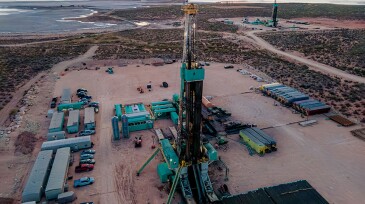
At SPE’s Permian Basin Energy Conference, operators shared behind-the-scenes details on innovations such as drilling horseshoe wells and trimulfrac completions along with in-basin challenges such as handling produced water.
-
A comprehensive, digitized water-management application has been designed to streamline and enhance the monitoring and management of water resources used in hydraulic fracturing.
-
This first of a two-part series provides guidelines for designing and operating advanced produced-water systems on offshore platforms, covering fluid characterization, chemical treatment, equipment, process configuration, operations, and effluent quality.
-
This study describes a technique combining borehole acoustic reflection imaging with production logging in a horizontal well experiencing high water cut with the aim of enabling a mitigation plan.
-
The Permian’s produced-water challenge presents an opportunity for innovation to pave the way toward a more sustainable future for the industry.
-
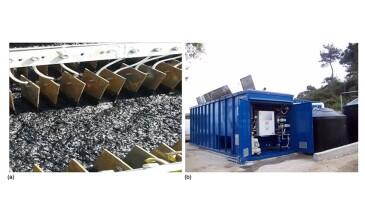
The authors of this paper study the effect of solids particles on oil/water separators and on produced-water treatment.
-
Researchers at Texas A&M University have developed a method of refining "liquid gold" for valuable critical minerals using what many consider traditional waste products: produced water and carbon dioxide.