Water management

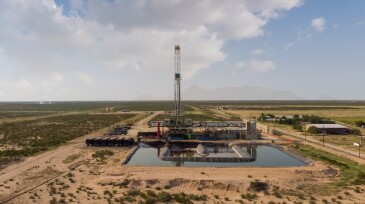
The startup company’s Midland Basin demonstration plant, located in the Permian Basin, takes a major step toward commercialization by proving its direct lithium extraction technology can refine battery-grade lithium carbonate from produced water under multiple 24/7 production cycles.

This paper presents an approach to the identification, selection, and implementation of initiatives for sustainable water management, withdrawal reduction, and water valorization.

Disposal wells remain the lowest-cost solution for produced water, but concerns over seismicity and long-term sustainability are accelerating interest in alternatives.
-
 Industrialization typically carries the blame for causing the water crisis across the continents, but it also creates and shepherds the innovation and introduction of a plethora of technologies and tools that enable intelligent use of water, intuitive approaches to conserve it, and implementable practices that preserve the watershed and prolong the life of aquifers.
 -
This paper describes a method to manage high-salinity produced water in an environmentally sustainable way by extracting potable water and reducing discharge water volume by at least 50%.
-
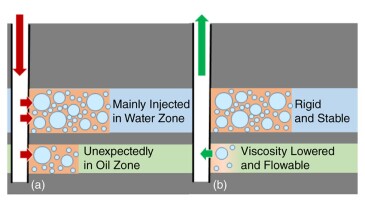
This paper presents the evaluation results of a water-shutoff agent based on an emulsion-type chemical material with nanoparticles.
-
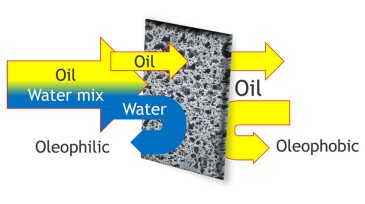
The authors of this paper discuss the use of dissolved polystyrene waste for the preparation of nanomembranes for separation of hydrocarbon pollutants from wastewater streams.
-
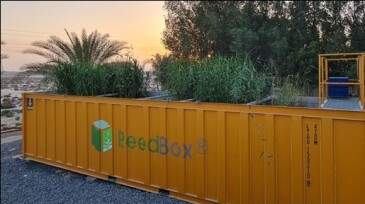
Nature-based solutions, such as constructed wetlands, have gained increasing interest over the past decade as a sustainable option for wastewater treatment in the domestic, industrial, and oil and gas sectors, with a growing number of examples now existing throughout the UAE, Oman, and other oil-producing regions.
-
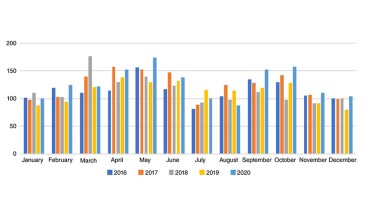
Permian Basin oil wells produce a lot of water. Much of it is injected into disposal zones above and below the basin’s primary oil- and gas-producing zone. When water is injected into these disposal zones, the pressure increases, mainly because no fluid is concurrently removed. Is this increase in pressure a concern? The data would suggest yes.
-
Produced water is a brew of salt, chemicals, and minerals that oil companies have always had to deal with. Landowners had no problem with that arrangement until they could see ways to make some money from it.
-
Diamondback Energy has agreed to spin off its water operations. Now, who’s next?
-
This paper presents a family of machine-learning-based reduced-order models trained on rigorous first-principle thermodynamic simulation results to extract physicochemical properties.
-
The Court of Appeals for the Eighth District of Texas ruled that the mineral lessee under an oil and gas lease owns the water extracted, not the surface property owner.