

Well integrity/control

A report commissioned by Havtil, the Norwegian Ocean Industry Authority, calls for better dialogue regarding pore-pressure uncertainty and higher-end drilling techniques like managed pressure drilling as methods to reduce the risk of well-control events.

This paper presents a study that confirms glass-reinforced-epoxy-lined tubing as a reliable, cost-effective solution for long-term water-injection service in moderate-salinity offshore environments.

This paper introduces in-pipe inspection technologies enabling high-resolution digital measurements of tubular internal diameter and wall thickness for critical downhole applications.
-
 This study aims to systematically assess casing integrity and corrosion risks associated with CO2 injection in oil-recovery operations.
 -
This paper describes the evolution of the operator’s initial PWC (perforate, wash, and cement) abandonment projects performed in deepwater Brazil.
-
The authors reach conclusions that the industry should define a standard testing method to improve swelling performance, including validation of repeatability, to complement existing guidelines.
-
This paper presents the development of an advanced simulation tool aimed at providing a better understanding of the complex fluid-displacement phenomena present in well-cementing processes.
-
This paper examines the effects of cement voids and microannuli on the collapse resistance of pipe/cement/pipe systems with void angles ranging from 0º to 70º.
-
A multidimensional Wiener process approach predicts casing remaining useful life, enabling safe, cost-effective well life extension and repurposing for carbon dioxide injection, CCS, and geothermal applications.
-
SponsoredUnwanted water production can erode well performance and asset economics if left unmanaged. Interwell’s precision water shutoff approach, grounded in diagnostics and engineered isolation, helps operators identify water-entry points, protect hydrocarbon flow, and restore sustainable well performance in mature and complex wells.
-
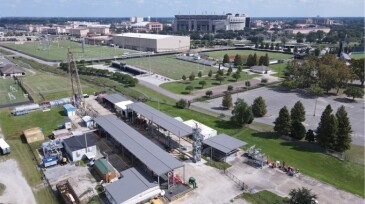
For more than a century, LSU has shaped petroleum engineering education, but few assets showcase its impact like the PERTT Lab. With six deep test wells and rare reservoir-depth gas-injection capabilities, the facility is helping drive breakthroughs in well control, carbon-dioxide injection, and next-generation energy technologies.
-
This study identifies critical knowledge gaps in wellbore integrity and underscores areas that require further investigation, providing insights into how wellbores must evolve to meet the technical demands of the energy transition.
-
This study illustrates the new capabilities, tailored for carbon-dioxide storage applications, of a modeling framework that provides a quantitative, risk-based assessment of the long-term integrity of legacy plugged and abandoned wells.






Page 1 of 16