Well integrity/control

A report commissioned by Havtil, the Norwegian Ocean Industry Authority, calls for better dialogue regarding pore-pressure uncertainty and higher-end drilling techniques like managed pressure drilling as methods to reduce the risk of well-control events.

This paper presents a study that confirms glass-reinforced-epoxy-lined tubing as a reliable, cost-effective solution for long-term water-injection service in moderate-salinity offshore environments.

This paper introduces in-pipe inspection technologies enabling high-resolution digital measurements of tubular internal diameter and wall thickness for critical downhole applications.
-
 This paper presents a novel application of artificial intelligence in computer vision for automating blowout-preventer pressure-chart-data extraction, demonstrating significant efficiency gains and a high return on investment.
 -
Two critical facets of the discipline of well control and wellbore integrity—decarbonization and groundbreaking automation of essential processes—are highlighted in the three primary paper selections presented at SPE and SPE-affiliated conferences during the past year.
-
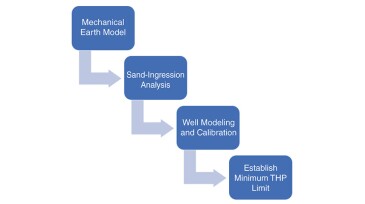
This paper describes an automated workflow that helps mitigate sanding caused by excessive drawdown by determining the minimum tubinghead pressure.
-
Intelligent completions could improve many of the world’s oil and gas wells, but not all are suited to the technology. There is another option.
-
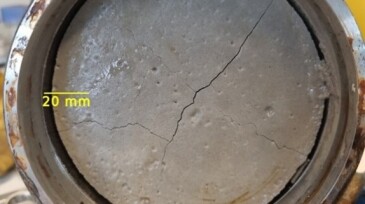
This paper presents the characterization and comparison of a metakaolin-based geopolymer as a candidate treatment for remedial operations in oil and gas wells versus conventional state-of-the-art materials.
-
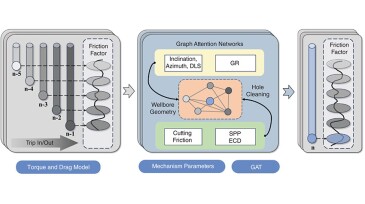
This paper describes the development of a method of predicting drillstring-friction coefficient during tripping operations that can be used for early warning of stuck pipe.
-
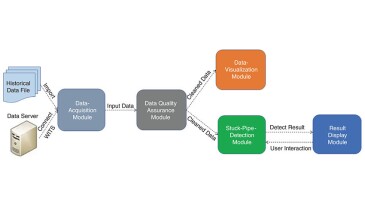
This paper proposes a time-series analysis approach to build a reliable, easy-to-use tool to automatically detect stuck pipe accurately and early.
-
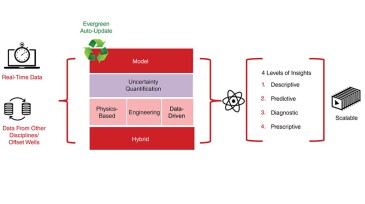
This paper presents a novel methodology that merges principles of physics, data science, and uncertainty modeling to offer more-resilient and -precise solutions for managing real-time pipe-sticking occurrences
-
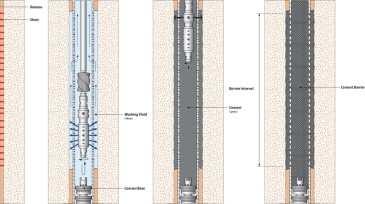
This paper presents a comprehensive literature review of perforate, wash, and cement techniques that compares new methods with traditional ones and uses field cases and computational fluid dynamics to find the most cost- and time-effective practices without sacrificing safety.
-
New strides in computer vision, well controls indicators, and BOP alignment were showcased at the recent Offshore Technology Conference.


![JPT_2025-09_GuestEd1_SS_382853197[4].jpg](https://assets.spe.org/dims4/default/860913d/2147483647/strip/true/crop/850x475+0+46/resize/365x204!/quality/90/?url=http%3A%2F%2Fspe-brightspot.s3.us-east-2.amazonaws.com%2F8a%2F95%2Fe4e82cb54fd597d497a5b1267f8a%2Fjpt-2025-09-guested1-ss-3828531974.jpg)