Well intervention

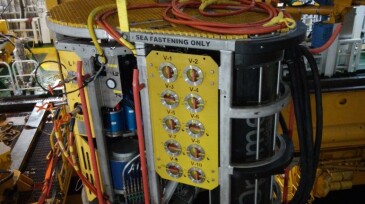
This paper details a trial involving the deployment of a transportable coiled tubing (CT) unit capable of holding 30,000 ft of high-strength 2⅞-in. CT.

This paper presents a novel approach to overcoming extended-reach limitations in coiled tubing interventions by using a split-string system, demonstrating measurable improvements in reach and operational speed in laterals exceeding 3 miles.

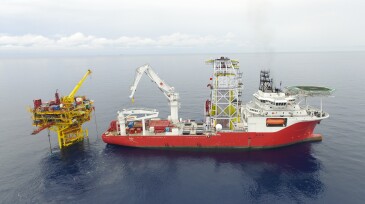
This paper describes the successful deployment of flexible coiled tubing technology in an oil-producing well of the offshore Frade field in Brazil’s Campos Basin.
-
 ExpressFiber is a single-use system that uses disposable-fiber technology.
 -
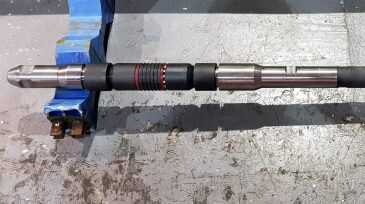
A wellbore repair tool was successfully deployed to rectify collapsed tubing in a remote well off the coast of Papua New Guinea.
-
Karoon Energy will put the rig to work in its Baúna field.
-
The service giant and a technology developer from Norway seek to create a broader market for two technologies aimed at lowering topside footprints and improved operational efficiency.
-
The pairing was instrumental in Expro’s receipt of a multiyear well-intervention services contract for Chevron’s Gorgon development.
-
The proposed solution is a good candidate for real-time burner-efficiency monitoring and automatic alarm triggering and optimization.
-
The interpretation of well tests, combined with petrophysical analysis, formation-test data, and production logs, provided insight into Khuff reservoirs.
-
The paper investigates the effect of complex environments on DFIT interpretation and presents a systematic method to analyze the data.
-
Final lab testing has been completed and field trials of the ultrahigh expansion bridge plug will begin by the end of this year.
-
Through collaboration, innovative technologies, and digitization, the newly formed alliance hopes to transform conventional intervention operations with clear targets of propelling hydrocarbon production on new and existing assets on the Norwegian continental shelf.