Testing page for app
-
 This article describes the MiQ grading framework for natural gas in detail and explains practical pathways for industry participants to achieve any desired MiQ grade.
 -
The first acid job dates to 1895. Challenges remain, however, when it comes to lithology, coverage, penetration, and management of reaction products. These themes remain a focus for stimulation engineers.
-
When there are two ways to measure something, and they offer significantly different numbers, which do you use?
-
Following more than 21 years leading SPE through periods of great growth and low oil prices, it’s time for family, friends, and the great outdoors.
-
Fracture monitoring to optimize fluid volumes and designs remains a critical area of development. Research is ongoing with the focus on combining different monitoring technologies including tracers, fiber optics, downhole cameras, and microseismic monitoring.
-
In Part 2 of a series of articles, the author focuses on generating a connection between the problem types and various methods of trying to solve these problems.
-
This paper describes efforts at the Hydraulic Fracturing Test Site 2 to collect a research data set to improve understating of spatial and temporal hydraulic fracture dimensions, proppant distribution, and reservoir depletion.
-
This study introduces a data-driven virtual viscosity meter as a tool to augment inline and laboratory viscosity measurements.
-
Coiled tubing has a key role to play, with strong arguments for itself: It is used throughout the life of a well, from exploration to abandonment, and its flexibility of use, combined with recent technology developments in pipe materials, real-time downhole telemetry, and specialized downhole tools—just to name a few—opens avenues to perform in a rigless manner many o…
-
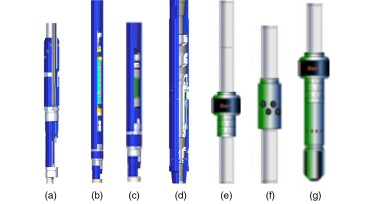
This study illustrates how a combination of a straddle-packer system and a downhole real-time telemetry successfully stimulated up to 38 stages while maintaining packer-seal integrity and downhole pressure.