Testing page for app
-
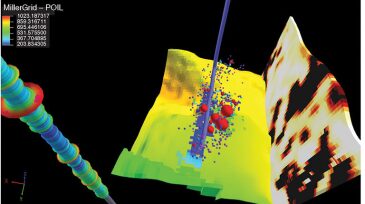
 A pair of inventive companies are working on a way to allow microseismic tests to visualize the otherwise silent process of propping fractures.
 -
Second only to the power and utility sector, the oil and gas industry is experiencing a higher frequency of cyber attacks than any other industry. The vast majority of penetrations are in the information technology (IT) networks that run a company’s daily business.
-
Ganesh C. Thakur, 2012 SPE President, and SPE member Leonard Kent Thomas are among the new members elected to the National Academy of Engineering (NAE).
-
Predictions of a 2016 recovery in the exploration and production (E&P) sector became increasingly rare after 2015 ended with a thud as oil prices sank below USD 40/bbl.
-
Developers of the latest generation of unconventional hydraulic fracturing models are hoping that current weak oil and gas prices will generate newfound interest in their software technology.
-
Without serious climate policy restrictions, the use of cheaper oil will likely grow and extend its life expectancy throughout the global energy system.
-
The sources and magnitude of shear and the effects on oil droplet size can have significant consequences for downstream separation equipment performance.
-
The value of peer reviewed papers is discussed along with two papers on sand/solids removal from separators and pipeline protection.
-
The Pugang gas field, one of the biggest inland gas discoveries of the last decade in China, has hydrogen sulfide (H2S) concentrations as high as 10%, making surface- and downhole-facilities design and execution challenging.
-
The authors have developed an active acoustic automatic leak-detection sonar designed to detect hydrocarbon leaks (mono- and multiphase oil and gas) at significant ranges, allowing coverage of wide areas from a single sensor.