Testing page for app
-
 Over the next decade, the number of electrically powered subsea systems in operation around the world will increase as companies adopt new technologies to produce oil and gas offshore more efficiently.
 -
A preview of the 2014 IADC/SPE Drilling Conference and Exhibition in Fort Worth, Texas.
-
Oil and gas companies are adapting to new safety regulations governing operations in the US Gulf of Mexico.
-
The lifespan of a huge, old oil field in Oklahoma is now linked to a fertilizer plant 68 miles away. Chaparral Energy is capturing 45 million ft3/D of carbon dioxide (CO2) that had previously been vented into the atmosphere in Coffeyville, Kansas, compressing it, and sending it via a pipeline.
-
Research into whether CO2 can be used to coax billions more barrels of oil from unconventional formations is beginning to show promise.
-
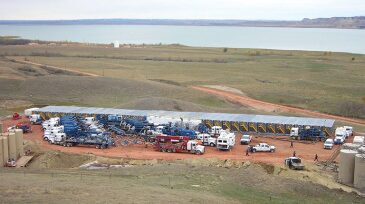
Tests showing increased recoveries in the Bakken formation using CO2 could have significant implications for the upstream oil and gas industry.
-
Fiber optic pressure and temperature (P/T) sensing technology for multizone fracturing and production monitoring is enabled by a new feed-through (FT) technology that integrates the optical fiber within the multiple elastomer elements of a compact, swellable openhole packer system.
-
In this third column on emerging geographic frontiers, I want to focus on what may be the fastest developing country in the Eastern Hemisphere—politically, demographically, and certainly from the standpoint of upstream oil and gas.
-
Asia Pacific’s energy sector is on the brink of major change. New areas are opening to foreign investment, national oil companies are adopting more aggressive E&P strategies, and the supply/demand balance is shifting.
-
The use of moored, oceangoing “smart” buoys that can harvest energy from waves could be an efficient and economic means of supplying electric power for various offshore oil and gas operations, including well trees, monitoring systems, and autonomous underwater vehicles.