Testing page for app
-
 In this inaugural podcast episode and transcript, Terry Palisch, who will officially begin his 2024 SPE presidency in October, discussed his views of the challenges facing our industry and SPE members, his outlook for our industry, and what his goals will be during his presidency.
 -
This paper presents a comprehensive technical review of applications of distributed acoustic sensing.
-
The authors of this paper analyze a robust, well-distributed parent/child well data set using a combination of available empirical data and numerical simulation outputs to develop a predictive machine-learning model.
-
While rapid production growth comes with proportional risks, it becomes crucial for reservoir surveillance engineers to quickly identify, derisk, and mitigate subsurface performance uncertainties. In this demanding scenario, the need for high-frequency reservoir performance surveillance is more critical than ever. Fortunately, advanced technologies have emerged as a r…
-
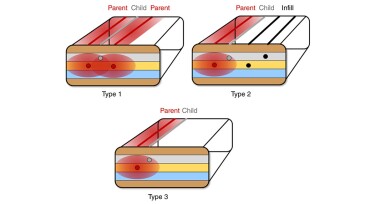
This paper summarizes a collaborative industry study to compare observations between shale-play data sets and basins, develop general insights into parent/child interactions, and provide customized economic optimization recommendations.
-
SPE technical papers synopsized in each monthly issue of JPT are available for download for SPE members for 2 months. These August and September papers are available now.
-
In this paper, example machine-learning models were trained using geologic, completion, and spacing parameters to predict production across the primary developed formations within the Midland Basin.
-
-
The authors of this paper describe a technology built on a causation-based artificial intelligence framework designed to forewarn complex, hard-to-detect state changes in chemical, biological, and geological systems.
-
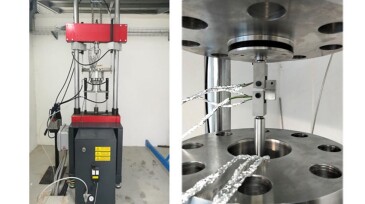
The authors’ work states that the qualification approach for offshore hydrogen pipeline systems should include material properties testing under various conditions.