

Latest News
-
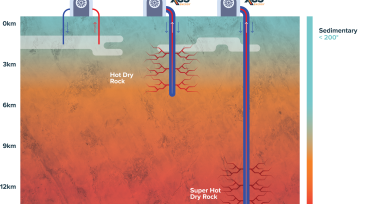
 Backed by more than $28 million in fresh investments, XGS Energy is prepping to introduce a new technology called thermal reach enhancement.
 -
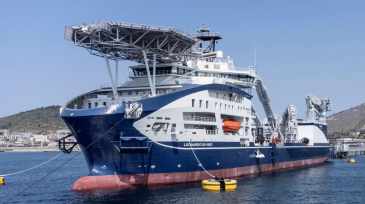
After becoming the first oil and gas major to source all its onshore grid electricity needs from nuclear and solar energy, ADNOC now focuses on decarbonizing production offshore.
-
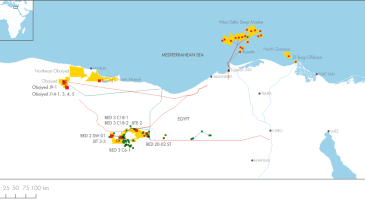
The award to Norway’s Longitude Engineering covers deepsea design and engineering services for Phase 10 of Egypt’s West Delta Deep Marine Concession.
-
Executives from BKV Corp. share why the mid-sized natural gas producer is diving headfirst into carbon sequestration projects and why you should too.
-
SPE President Terry Palisch is joined by Bryan Hibbard, senior editorial operations manager for SPE, to highlight how writing SPE technical papers and articles for JPT, SPE Journal, and other SPE publications can help to boost your career.
-
Chevron has some new ideas on how to get more oil for less cost out of shale wells in their early years.
-
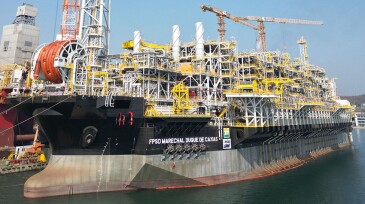
The Libra Consortium, led by Brazil’s Petrobras, has developed a method of separating carbon dioxide from reservoir fluids at the seafloor rather than the FPSO topsides.
-
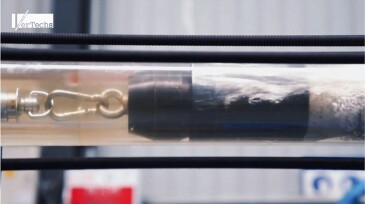
Casing deformations are common in the south-west shale regions of China and the Middle East, where the widespread use of 5.5-in., 26- and 26.8-lb/ft casing is the norm. In these regions, the majority of frac plugs are designed with an outer diameter (OD) of 4.055 in. or slightly larger, which frequently encounter restrictions resulting in the loss of bottomhole assemb…
-
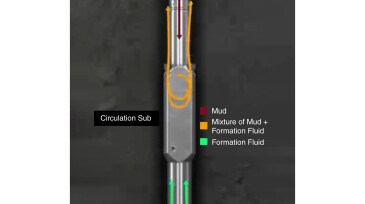
This paper addresses the challenges related to well control and the successful implementation of deep-transient-test operations in an offshore well in Southeast Asia carried out with the help of a dynamic well-control-simulation platform.
-
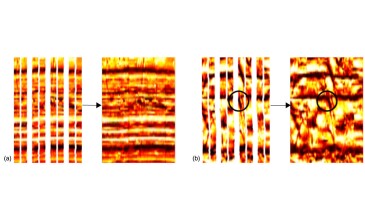
The authors of this paper propose an artificial-intelligence-assisted work flow that uses machine-learning techniques to identify sweet spots in carbonate reservoirs.
-
In this paper, the effect of cold-water injection on pressure transient analysis (PTA) of geothermal reservoirs is studied by varying the temperature of the injected cold water from room temperature to reservoir temperature.
-
This paper describes an autonomous drilling approach using an autocurve-drilling mode to automatically drill curved sections without human intervention and complete autonomous well construction.




Explore Content by Discipline
Trending Content





Get JPT articles in your LinkedIn feed and stay current with oil and gas news and technology.