

Latest News
-
 ChatGPT and its derivative artificial intelligence chatbots are fulfilling the needs and satisfying the curiosity of novices and more experienced AI users. Have you gotten your feet wet or dove right in?
 -
The technology and knowledge base of the E&P sector is poised to play a major role in the newer, lower-carbon energy economy.
-
In Part 1 of a series of articles, the author highlights candidate selection and problem clarification. This section describes how the success rate of solving conformance problems is improved by reducing assumptions and improving your problem understanding prior to executing a solution.
-
Building up the world’s hydrogen base will need technological breakthroughs and a lot of new demand. But to store it, the world needs reservoir engineers and other subsurface experts.
-
Olivier Houzé is the nominee for 2025 SPE President. He and six others make up the new slate of nominees recommended for positions open on the SPE International Board of Directors.
-
The authors of this paper discuss Saudi Arabia’s progress in gas flaring, the measures the government has taken, and how operators have adapted.
-
This paper compiles recommendations from a broad range of sources into a single document to aid future intelligent-completion installations and operations.
-
The authors of this paper develop a robust history-matched reservoir simulation model capable of predicting polymerflooding performance in the first such pilot to enhance heavy oil recovery on Alaska’s North Slope.
-
This paper presents autonomous-inflow-control-device installations in multiple horizontal wells of the Singue oilfield development in Ecuador.
-
The industry continues its move toward energy transition, demonstrating different stages among companies. These industry changes are affecting our current and future members, and SPE is working to provide guidance and education to our members through many avenues.
-
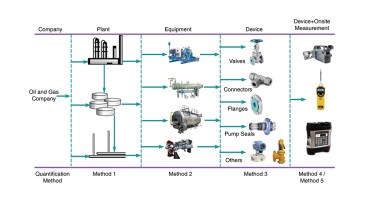
The authors of this paper describe an initiative taken to measure baseline data for methane emission for gas-processing facilities and gas-transmission and regasification units by using accurate tools and methodologies for detection and quantification.
-
The authors of this paper define a work flow that constrains solutions that match models and field observations and obtains a more-representative model for forecasting and optimizing fracture behavior.









Explore Content by Discipline
Trending Content


Get JPT articles in your LinkedIn feed and stay current with oil and gas news and technology.