

Latest News
-
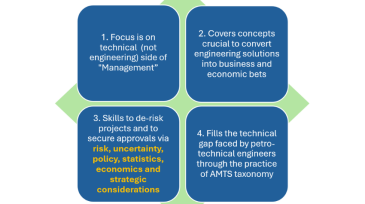
 The SPE Management Technical Section has been officially renamed the Asset Management Technical Section. The new name better reflects the section’s focus on asset management as a core discipline in the upstream oil and gas industry.
 -
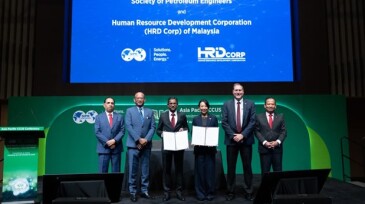
The Human Resource Development Corporation and Society of Petroleum Engineers Asia Pacific signed a memorandum of understanding to support the development of a future-ready energy workforce and strengthen Malaysia’s position as a regional hub for technical expertise and innovation.
-
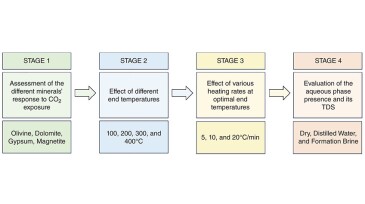
This paper presents a novel methodology for assessing the rapid mineral carbonation of carbon dioxide through geochemical interactions with carbon-, magnesium-, and iron-rich minerals abundant in geological formations.
-
This paper details the formulation and characterization of a novel nanoparticle system composed of polyethyleneimine and dextran sulfate for direct lithium extraction from bulk oilfield brines in North America.
-
Intelligent completions could improve many of the world’s oil and gas wells, but not all are suited to the technology. There is another option.
-
This article is the fourth in a Q&A series from the SPE Research and Development Technical Section focusing on emerging energy technologies. In this piece, David Reid, the CTO and CMO for NOV, discusses the evolution and current state of automated drilling systems.
-
Oil and gas experts encourage human/AI partnerships that can “supercharge” capabilities to create competitive advantages.
-
Casing deformation has emerged as a major challenge in China’s unconventional oil and gas fields, prompting the development of new solutions to address the issue.
-
The US supermajor is using one of its lowest-value hydrocarbon products to generate double-digit production increases in its most prolific US asset.
-
This paper reviews the motivation and development of response-based forecasting from the perspective of the authors, reviewing examples and processes that have served as validation and led to modeling refinement.
-
This study assesses the advantages, constraints, and necessary enhancements of both passive and active electromagnetic techniques in the context of carbon capture and storage.
-
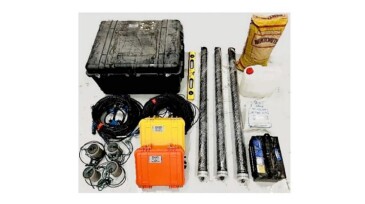
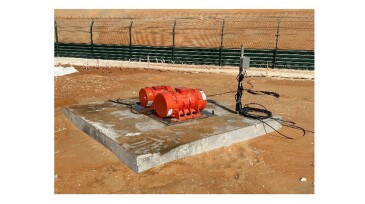
The paper describes the deployment of fiber-optic monitoring of CO₂ injection and containment in a carbonate saline aquifer onshore Abu Dhabi.

![JPT_2025-09_GuestEd1_SS_382853197[4].jpg](https://assets.spe.org/dims4/default/860913d/2147483647/strip/true/crop/850x475+0+46/resize/365x204!/quality/90/?url=http%3A%2F%2Fspe-brightspot.s3.us-east-2.amazonaws.com%2F8a%2F95%2Fe4e82cb54fd597d497a5b1267f8a%2Fjpt-2025-09-guested1-ss-3828531974.jpg)





Explore Content by Discipline
Trending Content


Get JPT articles in your LinkedIn feed and stay current with oil and gas news and technology.