

Latest News
-
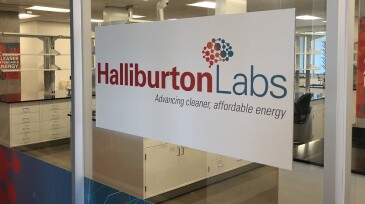
 Alumina Energy, Ionada, Parasanti, and SurgePower Materials will join the industrial scaling program at Halliburton Labs in Houston.
 -
While Schlumberger, Halliburton, and Baker Hughes focus their legacy technology and service portfolios on driving up efficiency, driving down cost, and making current sources of energy less carbon intensive, they diverge on their approaches to scaling up development and deployment of breakthrough clean energy technologies.
-
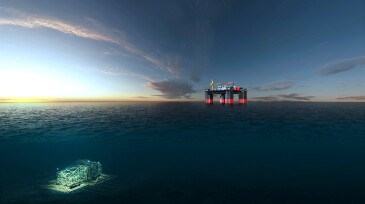
The Gorgon gas project will consist of a new floating field-control station and subsea compression infrastructure.
-
Natural gas is produced from the ground now, but maybe not forever.
-
The introduction of artificial intelligence (AI) cameras on marine vessels is planned to embrace a smarter automated analytic response and reporting culture, which, in turn, is expected to lead to increased safety oversight of critical offshore operations in areas that have been determined to have a lack of physical safety coverage.
-
The newly released document outlines the main types of tests available and examines approaches to isolation and quarantine for suspected and confirmed cases of COVID-19 in oil and gas industry workplaces.
-
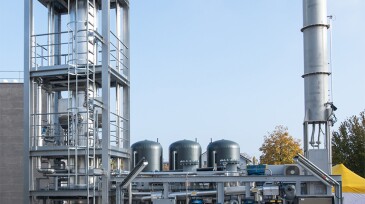
The authors write that the road to decarbonization will involve several technologies working in concert, not the use of only one at the expense of others.
-
A fast-moving pressure pulse is the priority of a research and development initiative that, if successful, will result in a new diagnostic technology for horizontal wells in tight reservoirs.
-
In reviewing the long list of papers this year, it has become apparent to me that the hot topic in reservoir simulation these days is the application of data analytics or machine learning to numerical simulation and with it quite often the promise of data-driven work flows—code for needing to think about the physics less.
-
The author shows that renewable energies are best used in replacing fossil fuels in the power sector, where it has the most effect in reducing CO2 emissions.
-
The authors write that even simple deep-learning architectures can identify a leak using pressure data.
-
We need to analyze the carbon intensity of reserves, the potential emissions that are in front of us, not just the carbon intensity of current operations. An engineering solution associated with production forecasts over time offers a framework for thinking through the carbon-emissions issue.








Explore Content by Discipline
Trending Content




Get JPT articles in your LinkedIn feed and stay current with oil and gas news and technology.