

Latest News
-
 One year after the Johan Sverdrup field came on stream, Equinor says digital technology has proven to be key to safety and value in all parts of the operation, increasing earnings by more than $200 million.
 -
Equinor plans to cut its global exploration staff by 30% in the next 3 years and plans to drill 30–40 wells globally this year. Ongoing labor strikes have led to the operator shutting in four of its platforms.
-
Incorporating imagination into AI agents has long been an elusive goal of researchers in the space. Imagine AI programs that are able not only to learn new tasks but also to plan and reason about the future.
-
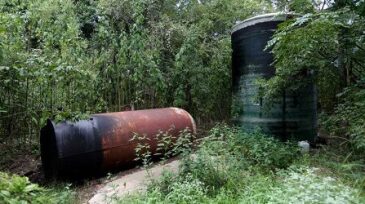
Plugging and cleaning up the open oil and gas wells in Texas could cost companies and taxpayers as much as $117 billion, according to a new report.
-
Total Chief Executive Officer Patrick Pouyanne called on European nations to help Mozambique fight an insurgency, backed by Islamic State, in part of the East African nation where the energy company is developing a natural gas project.
-
The rise of automation has been a common theme in stories that touch almost every business sector. One of the places where automation has shown the most value has been in enterprise security, where it can reduce costs and mitigate vulnerabilities in many instances.
-
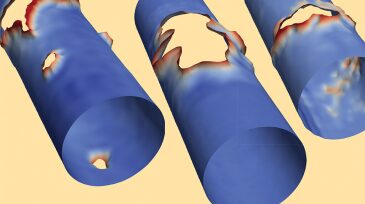
When a plug gets stuck in a well, consider the cause. Often stuck fracturing tools are a warning sign of casing trouble. Companies that have investigated plug problems have been surprised by the findings.
-
Though shelved by low oil prices, the plan to execute the largest enhanced oil recovery program of its kind offers insights into what it may take for the shale sector to escape pilot mode and scale up gas huff ’n’ puff operations.
-
Extending and transferring the high-temperature capabilities of existing E&P technologies could make geothermal energy development possible—and scalable—anywhere in the world.
-
This article addresses a means to improve hydraulic fracturing operations by measuring the perforation effectiveness on a stage-by-stage basis before the hydraulic fracturing process begins.
-
Automated image-processing algorithms can improve the quality and speed in classifying the morphology of heterogeneous carbonate rock. Several commercial products have produced petrophysical properties from 2D images and, to a lesser extent, from 3D images.
-
The complete paper provides an approach using machine-learning and sequence-mining algorithms for predicting and classifying the next operation based on textual descriptions.








Explore Content by Discipline
Trending Content



Get JPT articles in your LinkedIn feed and stay current with oil and gas news and technology.