

Latest News
-
 Despite the global downturn, the long-term transition to net zero presents a major opportunity to create new multibillion industries based around the North Sea. Cross-sector collaboration and major state/private sector intervention, together with strong leadership, will be key.
 -
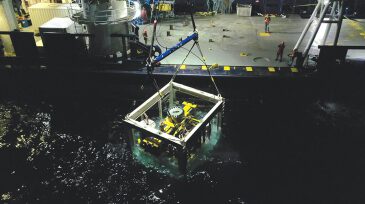
A lot about the blowout preventers used for offshore drilling has changed since Macondo in 2010, but the essentials remain. This evolution serves as a case study on why some oilfield technology is hard to change.
-
Nearly everything’s on the table as companies aim to shore up portfolios by curtailing investments and dumping low-priority assets.
-
Hit by the pandemic, the oil market crash, and the transition to a low-carbon energy future, exploration companies are spending bare budgets on near-term production and high-impact exploration.
-
The Oil & Natural Gas Corporation (ONGC) has invited bids for partnership to raise production from 64 marginal fields that were given to the company by the government without bidding. As they are small in size, these fields are uneconomical for a larger company.
-
Petrobras has taken a 65.3-billion Brazilian real ($11.2-billion) impairment on its exploration and production (E&P) assets, warning investors that changes in consumer behavior resulting from the coronavirus pandemic would likely be permanent.
-
In its May 2020 Short-Term Energy Outlook, the US Energy Information Administration (EIA) forecast US-marketed natural gas production to decrease by 5% in 2020. Production is expected to average 94.3 Bcf/D in 2020, down from 99.2 Bcf/D in 2019.
-
National oil companies (NOCs) globally are estimated to cut exploration budgets by over a quarter on average in 2020, said Wood Mackenzie.
-
Qatar Petroleum entered into a farm-in agreement with Total E&P to acquire a 45% participating interest in two blocks located in the Ivorian-Tano basin, offshore the Republic of Côte d’Ivoire.
-
Each year at the SPE Artificial Lift Conference and Exhibition, energy professionals convene to connect, grow, and learn—and also to laud outstanding innovators in their field.
-
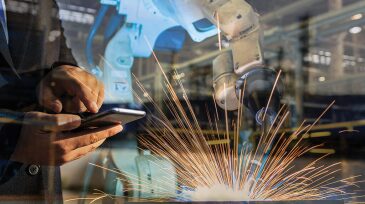
With their gee-whiz—albeit artificial—intelligence, robots may be the industry’s answer to jobs deemed dangerous, dirty, distant, or dull.
-
Bottle tests are the preferred method to test petroleum emulsion stability in the industry today. A new technique using nuclear magnetic resonance (NMR) is available to evaluate both stability and demulsification behavior of emulsions.





Explore Content by Discipline
Trending Content




Get JPT articles in your LinkedIn feed and stay current with oil and gas news and technology.