

Latest News
-
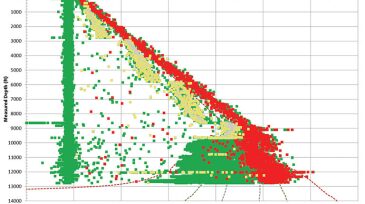
 The industry increasingly relies on forecasts from reservoir models for reservoir management and decision making. However, because forecasts from reservoir models carry large uncertainties, calibrating them as soon as data come in is crucial.
 -
The results of the authors’ research showed promising benefits from the use of a systematic procedure of model diagnostics, model improvement, and model-error quantification during data assimilations.
-
The complete paper explores the use of multilevel derivative-free optimization for history matching, with model properties described using principal component analysis (PCA) -based parameterization techniques.
-
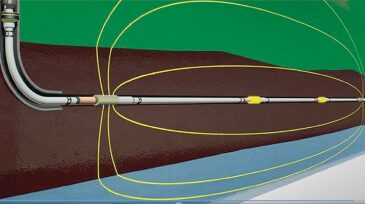
In this paper, the authors introduce a new technology installed permanently on the well completion and addressed to real-time reservoir fluid mapping through time-lapse electromagnetic tomography during production or injection.
-
The oil and gas industry recognized the value of UASs a few years ago, and now the industry and oil-spill-response organizations around the world are looking at ways to use UAS technology to have “eyes in the sky” to support spill responses and explore the safety, efficiency, and cost benefits.
-
A group of people who really care how drillers code the memos added to the daily drilling report is the data scientists—who find that the coded tags do not match the activity. A program that helps drillers code is one of three technologies featured in a JPT series on drilling measurement innovation.
-
The market in 2020 will be oversupplied by 3–5 million B/D and global inventory will surpass 400 million bbls over the next few months, according to ADI Analytics.
-
McDermott was selected previously for a study of the FPU. Completion of the Trion project is expected in Q3.
-
The loss of the Alexander L. Kielland platform on 27 March 1980 marked a turning point on the Norwegian continental shelf, said Anne Myhrvold, director general of the Petroleum Safety Authority Norway. She said she believes it has been crucial for offshore safety work.
-
The fact sheet, in conjunction with other IPIECA water management guidance, is intended as a guide to explore opportunities to reuse produced water.
-
Every horizontal well must pass through the flowback phase before it becomes a true producer. A wealth of insights are generated during this period, but they only matter if an operator knows how to listen and interpret the data sets correctly.
-
The Environmental Protection Agency announced a sweeping relaxation of environmental rules in response to the coronavirus pandemic, allowing power plants, factories, and other facilities to determine for themselves if they are able to meet legal requirements on reporting air and water pollution.









Explore Content by Discipline
Trending Content



Get JPT articles in your LinkedIn feed and stay current with oil and gas news and technology.