

Latest News
-
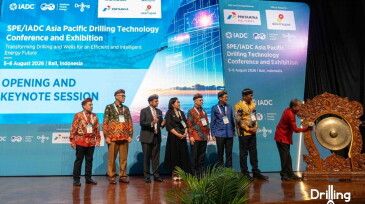
 More than 900 drilling and well professionals from 30+ countries gathered at APDT 2026 in Bali to explore how AI, automation, and advanced well technologies are driving safer, smarter, and more efficient drilling across Asia Pacific.
 -
As drilling operations become increasingly digital, computer vision is emerging as a continuous safety layer that complements, not replaces, established safety practices. The challenge is no longer whether artificial intelligence can detect hazards, but how operators should deploy, integrate, and govern these systems to improve safety without adding operational comple…
-
The Asset Management Technical Section has been selected to receive the 2026 Presidential Award for Outstanding Technical Section. The Integrated Reservoir Management and Data Science and Engineering Analytics technical sections have been awarded the 2026 Technical Section Excellence Award.
-
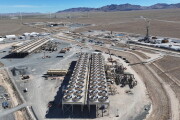
New geothermal technical content and programming will highlight knowledge transfer among oil and gas and geothermal professionals.
-
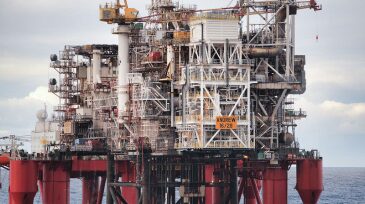
As the company works to realign its portfolio, it puts its North Sea assets in the crosshairs.
-
This article from the SPE Integrated Reservoir Management Technical Section (IRMTS) addresses decisions that look stronger than they are and take longer to implement than the reservoir can afford.
-
This case study from Malaysia’s Petronas outlines a comprehensive review of perforation-charge testing across various tubular and reservoir conditions to help improve production from complex downhole scenarios.
-
This case study presents the first field deployment of acoustic fracturing analysis to evaluate perforation efficiency and implement real-time interventions during pressure pumping.
-
As several commercial-scale projects are gearing up in the US, developers expect the next few years to reveal whether lithium extraction from brines can become a big business.
-
As managed pressure drilling gains traction, its principles are influencing a wider range of well-construction activities.
-
The challenge is to ensure that changes to major accident hazards are properly managed, whether the changes occur by adapting conventional industry operations to lower carbon or by introducing innovative technologies.
-
From AI-enabled walking rigs to subsea drones and autonomous inspection robots, robotics is rapidly moving from pilot projects to field deployment. The technology promises not only greater efficiency but also a fundamental shift in how the industry approaches safety and asset management.






Explore Content by Discipline
Trending Content



Get JPT articles in your LinkedIn feed and stay current with oil and gas news and technology.