

Monthly Features
-
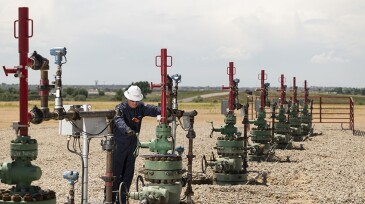
 This case study describes how edge computing and industrial internet of things platforms were deployed to automate and optimize production operations across four distinct basins.
 -
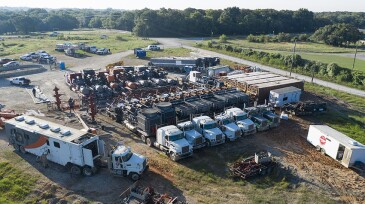
 This case study presents a procedure in which the operator compared production from wells with adjusted wettability to a control group, finding that the adjustments resulted in significant improvements in production and reductions in produced water.
 -
 As equipment advances to handle extreme pressures and temperatures, new Gulf opportunities are emerging—alongside increasing operator demands for standardized, scalable, faster, and more affordable solutions.
 -
 Ultradeepwater prospects along the northern coast of Brazil could help offset decline in legacy basins, though permitting hurdles remain a wild card.
 -
 The US federal government is working to stymie offshore wind power, but proponents aren’t going quietly. Armed with data, they are taking on a sea of misinformation and hostility to defend the burgeoning resource in the US, while the rest of the world moves ahead briskly.
 -
 This case study from Erdos Miller outlines the use of magnetic short-hop technologies to complement the use of mud pulsers to transmit telemetry to surface.
-
 The oil and gas industry’s sustainability and success depend on its ability to cultivate and nurture a skilled and knowledgeable workforce.
 -
BKV Corp. has combined bullhead and liner refracturing methods to create an approach called the hybrid expandable liner system.
-
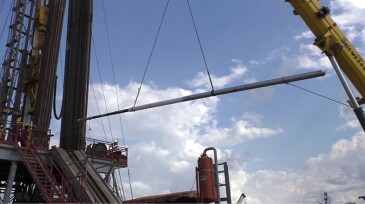
Prior to proceeding with a contract to fulfil a rigless P&A campaign for Sasol in Mozambique, BiSN designed a field trial to prove the effectiveness of its bismuth plug technology. Although the technology had been used in 19 countries by BiSN for a variety of downhole applications, it had not yet been qualified for use in Mozambique.
-
While many expect oil and natural gas to retain their roles in the energy mix of 2050, the more significant question should not only be on how much oil and gas will be needed but from where the world will find it.
-
Each year during its Annual Technical Conference and Exhibition (ATCE), SPE honors members whose outstanding contributions to SPE and the petroleum industry merit special distinction. Recipients will be recognized at the Annual Awards Banquet on Tuesday, 17 October.
-
As production dynamics evolve over the full life cycle of a tight-oil play, a single artificial lift method may not be the most cost-effective solution.
-
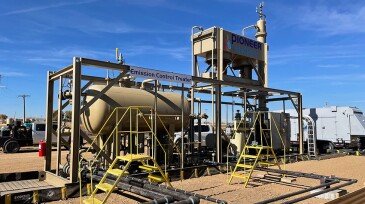
A new type of skid-mounted production facility was deployed on a pad in Weld County, Colorado, and demonstrated elimination of emissions, improved operational efficiency, and an increased crude yield of 11.3%.
-
Two firms are using hydraulic fracturing to create high-pressure water reservoirs that can be turned on and off to meet electricity demand.
-
Part 4 of this series provides an overview of ongoing research and recent technology improvements within the US taking place in both academia and the service industry.
-
Produced water is a brew of salt, chemicals, and minerals that oil companies have always had to deal with. Landowners had no problem with that arrangement until they could see ways to make some money from it.



Explore Content by Discipline
Power Up With JPT Newsletters
JPT Newsletter (Weekly).
All the top stories, trends, and tech.
JPT Unconventional Insights (Monthly).
Fresh takes on shale and tight oil.
Get JPT articles in your LinkedIn feed and stay current with oil and gas news and technology.