

Monthly Features
-
 This case study describes how edge computing and industrial internet of things platforms were deployed to automate and optimize production operations across four distinct basins.
 -
 This case study presents a procedure in which the operator compared production from wells with adjusted wettability to a control group, finding that the adjustments resulted in significant improvements in production and reductions in produced water.
 -
 As equipment advances to handle extreme pressures and temperatures, new Gulf opportunities are emerging—alongside increasing operator demands for standardized, scalable, faster, and more affordable solutions.
 -
 Ultradeepwater prospects along the northern coast of Brazil could help offset decline in legacy basins, though permitting hurdles remain a wild card.
 -
 The US federal government is working to stymie offshore wind power, but proponents aren’t going quietly. Armed with data, they are taking on a sea of misinformation and hostility to defend the burgeoning resource in the US, while the rest of the world moves ahead briskly.
 -
 This case study from SLB and offshore producer PRIO describes the longest openhole section in Latin America with the highest extended-reach drilling ratio in Brazil’s history.
-
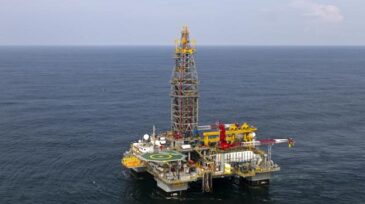
 Extending the drilling season beyond the open water period in the Arctic is the primary driver behind a new jackup concept designed to operate in light ice conditions. The defining feature of the Arctic jackup is its telescopic leg that protects the drillstring from ice loads and is adjustable for depths down to approximately 50 m.
 -
One of the key enabling technologies involved with modern Arctic-going vessels is the azimuth thruster. Azimuth thrusters are favored by the cruise industry because they can be tilted at different angles, which reduces propeller-induced vibrations and shock loads on a ship’s hull, allowing passengers to enjoy a quieter voyage. But in the Arctic, azimuth thrusters have…
-
The industry’s experience thus far drilling offshore the Arctic is a powerful argument to build a new generation of vessels and drilling rigs purpose built for operations in heavy ice.
-
For companies working to maximize production and profits, one of the biggest questions has been, and continues to be, how manyu wells to drill per square mile.
-
Youssif Saleh, general manager of Qatar Shell Research and Technology Centre in the Qatar Science and Technology Park, discusses the R&D strategy of the center and Qatar.
-
Nathan Meehan is the nominee for 2016 SPE president. He and nine others make up the slate of nominees recommended for positions open on the SPE Board of Directors.
-
Some operators are returning to their North American mature unconventional shale wells to refracture, or restimulate, the rock to accelerate production and enhance ultimate recoveries.
-
The 45th edition of the Offshore Technology Conference (OTC) will take place 5–8 May at Reliant Park in Houston, Texas.
-
Imagine if you could have seen North America’s shale gas phenomenon coming, years ahead of the competition. What would you have done differently?
-
The simplest way to measure return on investment for an offshore water treatment system is to determine whether using the system actually reduces the risk of paying a fine for violating water pollution laws.







Explore Content by Discipline
Power Up With JPT Newsletters
JPT Newsletter (Weekly).
All the top stories, trends, and tech.
JPT Unconventional Insights (Monthly).
Fresh takes on shale and tight oil.
Get JPT articles in your LinkedIn feed and stay current with oil and gas news and technology.