

Monthly Features
-
 EQT is benchmarking its way to basin-leading productivity and relying on partnerships and new technology to turn KPIs into operational reality.
 -
 Drilling experts recently shared candid views on what will be required for their segment of the upstream business to move to the next stage of development.
 -
 This case study from Italian technology developer Sentris highlights the effectiveness of using sensors during pigging operations to optimize cleaning efficiency.
 -
 Experts and industry leaders gathered in The Woodlands, Texas, recently to sift through the challenges of carbon capture, utilization, and storage. The puzzle is coming together, but some critical pieces are still needed before the results look like the picture on the box.
 -
 Two examples from ONGC show how supervised AI-driven automation scaled well modeling across hundreds of offshore wells, saving more than 1,000 engineering hours.
 -
 Examples demonstrate how an Integrated Operations Center as a Service (IOCaaS) model, powered by artificial intelligence, reduced costs by 5% and increased production by 6% in Canada.
-
 The time it takes for a shale producer to drill a well has been a major focus for the past decade. A new report says the industry should place equal weight on how long it takes a well to actually deliver first oil.
 -
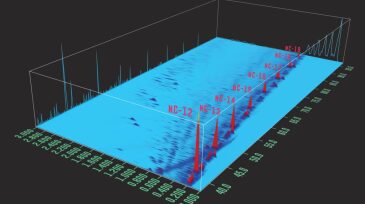
Knowing which horizon crude oil flows from and in what proportions has been a major challenge for shale producers. Increasingly, they are turning to new technology to find the answer.
-
The types of advancements made in real-time drilling data acquisition and processing are now on the doorstep of the North American completions sector. Technology developers are banding together under the umbrella of “coopetition” in a bid to change the way producers fracture tight reservoirs.
-
Figuring out how far apart to place horizontal wellbores remains one of the biggest challenges facing the future of the shale revolution. One roadblock appears to be the way in which the sector has traditionally measured these distances.
-
Ten big names in the oil and gas business created a group to try out ways to use blockchain in the oil business, and test if the record keeping and automatic data collection software can track water shipments more efficiently.
-
Not all friction reducers are created equal. With dozens of varieties on the market, industry research suggests that oil and gas companies be choosy.
-
Equinor is working on a natural language processing tool that could combine data sources and help planners anticipate the issues that affect onsite operational safety.
-
Artificial intelligence tools present many opportunities for the energy industry, and, as technological concepts leave the realm of science fiction, companies have started to grasp what is possible. What roles do culture and ethics play in helping companies understand the digital revolution?
-
Colombia is walking a thin line between becoming another fading petroleum province and Latin America’s next big success story. Its aces in the hole: unleashing its nascent offshore and unconventional sectors.
-
If you can see it, then maybe you can control it. This sums up the latest quest that the unconventional engineering community embarked upon to get a better understanding of proper well spacing and how fractures really interact.





Explore Content by Discipline
Power Up With JPT Newsletters
JPT Newsletter (Weekly).
All the top stories, trends, and tech.
JPT Unconventional Insights (Monthly).
Fresh takes on shale and tight oil.
Get JPT articles in your LinkedIn feed and stay current with oil and gas news and technology.