

Monthly Features
-
 Oil prices are high, but spending has not caught up—yet. Meanwhile, exploration strategies are changing around the world toward a lower-risk model, and the frenzied pace of US M&A has very much cooled off.
 -
 This case study outlines a full-scale testing program focused on the behavior of thermal casing connections subjected to severe bending and low-cycle fatigue loading.
 -
 With millions of wells having been drilled in the US since the beginning of the oil age, the land is pocked with old, unused wellbores. For most, repurposing is a pipe dream. Plugging is the best option.
 -
 Disposal wells remain the lowest-cost solution for produced water, but concerns over seismicity and long-term sustainability are accelerating interest in alternatives.
 -
 As managed pressure drilling gains traction, its principles are influencing a wider range of well-construction activities.
 -
 This case study presents the first field deployment of acoustic fracturing analysis to evaluate perforation efficiency and implement real-time interventions during pressure pumping.
-
 BKV Corp. has combined bullhead and liner refracturing methods to create an approach called the hybrid expandable liner system.
 -
The oil and gas industry’s sustainability and success depend on its ability to cultivate and nurture a skilled and knowledgeable workforce.
-
Part 4 of this series provides an overview of ongoing research and recent technology improvements within the US taking place in both academia and the service industry.
-
Each year during its Annual Technical Conference and Exhibition (ATCE), SPE honors members whose outstanding contributions to SPE and the petroleum industry merit special distinction. Recipients will be recognized at the Annual Awards Banquet on Tuesday, 17 October.
-
As production dynamics evolve over the full life cycle of a tight-oil play, a single artificial lift method may not be the most cost-effective solution.
-
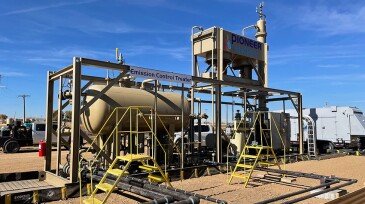
A new type of skid-mounted production facility was deployed on a pad in Weld County, Colorado, and demonstrated elimination of emissions, improved operational efficiency, and an increased crude yield of 11.3%.
-
Two firms are using hydraulic fracturing to create high-pressure water reservoirs that can be turned on and off to meet electricity demand.
-
While many expect oil and natural gas to retain their roles in the energy mix of 2050, the more significant question should not only be on how much oil and gas will be needed but from where the world will find it.
-
Produced water is a brew of salt, chemicals, and minerals that oil companies have always had to deal with. Landowners had no problem with that arrangement until they could see ways to make some money from it.
-
New studies are a reminder that the effort to identify, classify, and nullify frac hits remains paramount to the future of the unconventionals business.



Explore Content by Discipline
Stay Ahead With JPT Newsletters
JPT Newsletter (Weekly).
Essential global industry news, technology developments, and market trends delivered to your inbox.
JPT Unconventional Insights (Monthly).
Global perspectives and expert analysis on shale, tight oil, and emerging unconventional plays.
Get JPT articles in your LinkedIn feed and stay current with oil and gas news and technology.