

Monthly Features
-
 Oil prices are high, but spending has not caught up—yet. Meanwhile, exploration strategies are changing around the world toward a lower-risk model, and the frenzied pace of US M&A has very much cooled off.
 -
 This case study outlines a full-scale testing program focused on the behavior of thermal casing connections subjected to severe bending and low-cycle fatigue loading.
 -
 With millions of wells having been drilled in the US since the beginning of the oil age, the land is pocked with old, unused wellbores. For most, repurposing is a pipe dream. Plugging is the best option.
 -
 Disposal wells remain the lowest-cost solution for produced water, but concerns over seismicity and long-term sustainability are accelerating interest in alternatives.
 -
 As managed pressure drilling gains traction, its principles are influencing a wider range of well-construction activities.
 -
 This case study presents the first field deployment of acoustic fracturing analysis to evaluate perforation efficiency and implement real-time interventions during pressure pumping.
-
 This case study demonstrates an estimated cost savings of AICD completions in six wells of more than $20 million in capital and operating expenses compared with a more conventional sliding side door completion to manage gas breakthrough.
 -
The Gulf’s offshore wind future is no breezy affair as governments and industries must work together to meet lofty goals.
-
Glynn Williams, CEO of Silixa, offers his take on the role fiber-optic technology will play in the rise of CO2 storage and on the firm’s progress in the tight-rock sector.
-
Devon, Shell, and SM Energy offer some of their latest learnings from recent independent subsurface diagnostics projects. Their work underscores why this arena of technology has become a cornerstone for hydraulic-fracture design in tight-rock reservoirs.
-
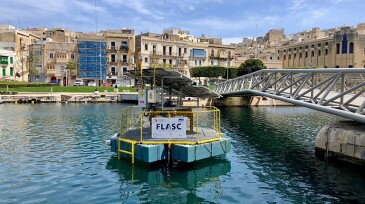
The partnership of Subsea 7 and Flasc has a plan to use out-of-service pipelines as pressure vessels in a hydro-pneumatic energy storage concept.
-
The assumption of lower emissions from natural gas only holds true when the methane leaks and flaring are addressed. Mitigation of methane emissions offers an opportunity for the oil and gas industry to drastically reduce overall emissions that are typically reported on a CO2-equivalent basis. Some producers opt to showcase their good performance via voluntary certifi…
-
Drillers are working to find ways to break some bad data habits. Those problems can range from the use of multiple formulas to calculate mechanical specific energy to timekeeping systems where the clocks and the time records are often off.
-
With speakers from various disciplines and professions, the program focuses on industry trends, challenges, and technology applications and advances.
-
How do you make new money from old offshore fields? The choice between investing in older assets or decommissioning them depends on oil and gas prices, the ingenuity of technical people, and the willingness of a company’s executives to hold on to older assets.
-
It has often been considered risky to use heavy drillships in depths below 2,000 ft. However, a good measure of innovation and market timing has recently proved otherwise.






Explore Content by Discipline
Stay Ahead With JPT Newsletters
JPT Newsletter (Weekly).
Essential global industry news, technology developments, and market trends delivered to your inbox.
JPT Unconventional Insights (Monthly).
Global perspectives and expert analysis on shale, tight oil, and emerging unconventional plays.
Get JPT articles in your LinkedIn feed and stay current with oil and gas news and technology.