

Monthly Features
-
 Oil prices are high, but spending has not caught up—yet. Meanwhile, exploration strategies are changing around the world toward a lower-risk model, and the frenzied pace of US M&A has very much cooled off.
 -
 This case study outlines a full-scale testing program focused on the behavior of thermal casing connections subjected to severe bending and low-cycle fatigue loading.
 -
 With millions of wells having been drilled in the US since the beginning of the oil age, the land is pocked with old, unused wellbores. For most, repurposing is a pipe dream. Plugging is the best option.
 -
 Disposal wells remain the lowest-cost solution for produced water, but concerns over seismicity and long-term sustainability are accelerating interest in alternatives.
 -
 As managed pressure drilling gains traction, its principles are influencing a wider range of well-construction activities.
 -
 This case study presents the first field deployment of acoustic fracturing analysis to evaluate perforation efficiency and implement real-time interventions during pressure pumping.
-
 This year, the SPE Artificial Lift Conference and Exhibition–Americas will be held 23–25 August in Galveston, Texas, with the theme “Modern Artificial Lift–Adapting to a Changing Industry.” The event provides opportunities for technical professionals to gain insights into current trends and field experiences and explore innovative solutions. A special Legends of Art…
 -
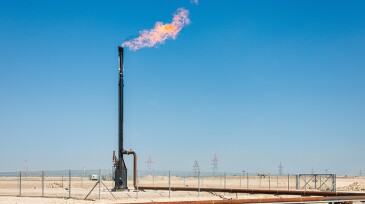
An emissions-reduction study conducted for a Middle East operator identified potential annual savings of $10 million–$15 million, a 20% decrease in total Scope 1 CO2eq emissions, and 10 MW of energy reduction and delivered more than 100 recommendations for both technical and internal framework improvements.
-
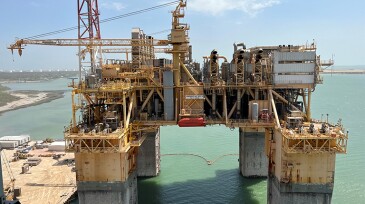
Something often talked about but rarely occurs is the reuse of an existing, but idled, production platform on a new field. LLOG wants to change that with ambitions to rejuvenate the former Independence Hub floating production system for use on its Leon/Castile project in the deepwater Gulf of Mexico.
-
Terry Palisch is the nominee for 2024 SPE President. He and five others make up the new slate of nominees recommended for positions open on the SPE International Board of Directors.
-
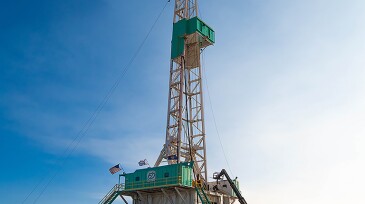
The drilling of wells in shale and granite shares a common need—faster drilling is required to make it work.
-
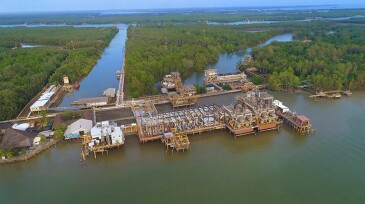
What You Should Know About Offshore and Sour Gas CCS: High Cost, Leak Mitigation, and TransportationSoutheast Asia promises to be a compelling case study in how oil and gas producers will soon face the realities of scaling up carbon capture and storage projects.
-
Petronas and Pertamina share their technical approach in implementing and optimizing artificial lift using advanced technology and their vision for the future. Their experiences in dealing with operational challenges in a mature field highlight areas for improvement and innovation.
-
With aggressive net-zero goals hanging overhead, countries are looking to fast-track low-carbon energy projects, and many are including nuclear in the mix.
-
Drilling automation champions met to identify where this emerging technology needs to be by the end of the decade. What they ended up agreeing on most was that the business models used today are largely incompatible with the technology of the future.
-
Managed-pressure drilling has been associated as a technology used only on problematic wells and only as a last resort. However, when integrated at the beginning of operations as part of a comprehensive well plan, it becomes a performance-enhancing solution for any type of well classification, including development, directional, multilaterals, and horizontals.




Explore Content by Discipline
Stay Ahead With JPT Newsletters
JPT Newsletter (Weekly).
Essential global industry news, technology developments, and market trends delivered to your inbox.
JPT Unconventional Insights (Monthly).
Global perspectives and expert analysis on shale, tight oil, and emerging unconventional plays.
Get JPT articles in your LinkedIn feed and stay current with oil and gas news and technology.