

Monthly Features
-
 Oil prices are high, but spending has not caught up—yet. Meanwhile, exploration strategies are changing around the world toward a lower-risk model, and the frenzied pace of US M&A has very much cooled off.
 -
 This case study outlines a full-scale testing program focused on the behavior of thermal casing connections subjected to severe bending and low-cycle fatigue loading.
 -
 With millions of wells having been drilled in the US since the beginning of the oil age, the land is pocked with old, unused wellbores. For most, repurposing is a pipe dream. Plugging is the best option.
 -
 Disposal wells remain the lowest-cost solution for produced water, but concerns over seismicity and long-term sustainability are accelerating interest in alternatives.
 -
 This case study from Malaysia’s Petronas outlines a comprehensive review of perforation-charge testing across various tubular and reservoir conditions to help improve production from complex downhole scenarios.
 -
 As managed pressure drilling gains traction, its principles are influencing a wider range of well-construction activities.
-
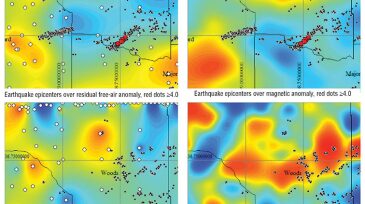
 It is known that a well injecting a lot of water near a big fault can lead to earthquakes. The problem is, more often than not those faults are not known until after a tremor.
 -
The Unconventional Resources Technology Conference included discussions on emerging approaches to improving oil and gas recovery from tight rocks and exploring where the risks still lie with induced seismicity.
-
PipeFractionalFlow, a spinoff startup from the University of Texas at Austin, uses new theories and equations to make modeling complex multiphase flow more affordable. A model recently developed offers operators an “independent and unbiased” way to validate the system and select candidate wells.
-
This well-established oilfield consultancy explains why 2020 might be a big year for the unconventional sector.
-
In thermal enhanced oil recovery there is one big ingredient: steam. A new startup from Germany believes it has found the oil industry’s cheapest way to make it.
-
A Canadian research organization believes the country’s oilfield technology could help another energy sector drive down its costs and it may work out for heavy oil producers too.
-
Ocean waves are potential sources of energy that are powerful, often more readily available than wind and solar, and closer to population centers along coastlines.
-
ADNOC’s authority on technology maturity describes the case studies used to test the company’s new technology qualification process.
-
Software that offers turn-by-turn directions for drilling a horizontal well could drastically reduce the number of directional drillers.
-
Top US seismic experts say they are keeping a watchful eye on ground shaking in the state as new concerns are raised in neighboring Texas.




Explore Content by Discipline
Stay Ahead With JPT Newsletters
JPT Newsletter (Weekly).
Essential global industry news, technology developments, and market trends delivered to your inbox.
JPT Unconventional Insights (Monthly).
Global perspectives and expert analysis on shale, tight oil, and emerging unconventional plays.
Get JPT articles in your LinkedIn feed and stay current with oil and gas news and technology.