

Monthly Features
-
 Oil prices are high, but spending has not caught up—yet. Meanwhile, exploration strategies are changing around the world toward a lower-risk model, and the frenzied pace of US M&A has very much cooled off.
 -
 This case study outlines a full-scale testing program focused on the behavior of thermal casing connections subjected to severe bending and low-cycle fatigue loading.
 -
 With millions of wells having been drilled in the US since the beginning of the oil age, the land is pocked with old, unused wellbores. For most, repurposing is a pipe dream. Plugging is the best option.
 -
 Disposal wells remain the lowest-cost solution for produced water, but concerns over seismicity and long-term sustainability are accelerating interest in alternatives.
 -
 This case study from Malaysia’s Petronas outlines a comprehensive review of perforation-charge testing across various tubular and reservoir conditions to help improve production from complex downhole scenarios.
 -
 As managed pressure drilling gains traction, its principles are influencing a wider range of well-construction activities.
-
 Angola’s powerful oil and gas industry has enabled the country’s rapid growth, but an overreliance on those revenues has posed major challenges. Does a recent change of leadership mean a shift in the nation’s economic direction?
 -
One of the oldest drilling consortia in the world, The University of Tulsa Drilling Research Project, celebrates 50 years and is poised to continue its tradition for another 5 decades.
-
2018 SPE President Darcy Spady shares the goals for his presidency and his strategies to steer the Society through the downturn and changing demographics in the industry.
-
The promise of getting 30% more oil production from shale wells has set off a race by companies trying to see if they can replicate what EOG has done. But the big question is: Can it add enough oil to increase the industry’s low average recovery rate?
-
Tiny soil samples may contain as many as 300,000 species of microbial life, but a Netherlands-based startup has figured out that between 50 and 200 of them can tell an operator if a drilling location will hold oil and gas reserves.
-
To reduce the risk of wells getting “frac hits,” Permian Basin operators around Midland created an information exchange to give them notice of nearby fracturing.
-
No longer considered a buzz phrase, cloud computing has made converts of the largest oil companies, and now the smaller ones are next.
-
Faced with big potential discoveries under terrain that makes good seismic imaging impossible, Total is rethinking how to gather the data it needs, with an idea that could change the face of seismic exploration.
-
A type curve is a quick way to answer a critical question—what does a typical well produce over time in a given place?
-
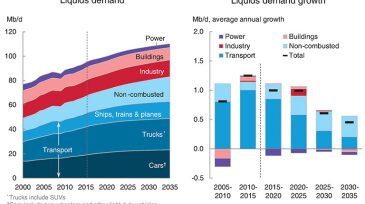
Oil demand growth from the transportation sector, the linchpin of oil consumption, will slow to a trickle by 2035 and level off, while demand from the petrochemicals sector will become oil’s chief growth driver, the BP 2017 Energy Outlook says.






Explore Content by Discipline
Stay Ahead With JPT Newsletters
JPT Newsletter (Weekly).
Essential global industry news, technology developments, and market trends delivered to your inbox.
JPT Unconventional Insights (Monthly).
Global perspectives and expert analysis on shale, tight oil, and emerging unconventional plays.
Get JPT articles in your LinkedIn feed and stay current with oil and gas news and technology.