

Monthly Features
-
 Oil prices are high, but spending has not caught up—yet. Meanwhile, exploration strategies are changing around the world toward a lower-risk model, and the frenzied pace of US M&A has very much cooled off.
 -
 This case study outlines a full-scale testing program focused on the behavior of thermal casing connections subjected to severe bending and low-cycle fatigue loading.
 -
 With millions of wells having been drilled in the US since the beginning of the oil age, the land is pocked with old, unused wellbores. For most, repurposing is a pipe dream. Plugging is the best option.
 -
 Disposal wells remain the lowest-cost solution for produced water, but concerns over seismicity and long-term sustainability are accelerating interest in alternatives.
 -
 This case study from Malaysia’s Petronas outlines a comprehensive review of perforation-charge testing across various tubular and reservoir conditions to help improve production from complex downhole scenarios.
 -
 As managed pressure drilling gains traction, its principles are influencing a wider range of well-construction activities.
-
 As well-developed shale plays and tight formations mature and decline in production, nontraditional strategies for maximizing production and discovering new resources must be considered.
 -
The top US wind power official told the offshore upstream sector that it can help build “smaller, leaner, and cheaper" wind turbine farms.
-
With speakers from various disciplines and professions, the program focuses on industry trends, challenges, and technology applications.
-
Low oil prices have made the goal of this Petrobras project and its four partners to lower the break-even price of operating to USD 35/bbl.
-
With Over 200 Shale Well Installs, This Slug-Smoothing Lift Technology Is Boosted By Schlumberger JVSlug flow has made the life of an unconventional production engineer a bit complicated, but a new downhole technology may smooth things right out by solving some big artificial lift problems for the shale sector.
-
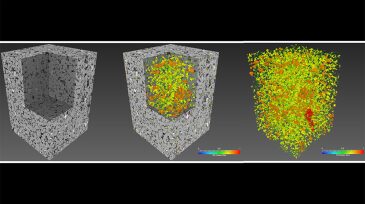
Need a Faster Measure of Relative Permeability? Take a CT Scan and Follow With Digital Rock AnalysisFaster, lower-cost measures of multiphase permeability of conventional reservoirs are promised by a digital rock analysis method developed by BP and Exa, which is marketing software to measure relative permeability.
-
When oil prices began to fall rapidly in the last half of 2014, the impact was quickly felt in all of SPE’s programs. Our magazines were affected first by a reduction in advertising as companies reduced their marketing budgets.
-
Significant production gains are being made with hydraulicly fractured wells using diversion to stimulate a higher percentage of the perforations.
-
A new process system compatible with all types of drilling rigs is opening the door to wider adoption of drilling automation in North America’s shale sector.
-
There is increasing interest in drilling the Austin Chalk formation, with hopes that the latest unconventional development methods can deliver a boom in a play that has seen several over a 90-year history.






Explore Content by Discipline
Stay Ahead With JPT Newsletters
JPT Newsletter (Weekly).
Essential global industry news, technology developments, and market trends delivered to your inbox.
JPT Unconventional Insights (Monthly).
Global perspectives and expert analysis on shale, tight oil, and emerging unconventional plays.
Get JPT articles in your LinkedIn feed and stay current with oil and gas news and technology.