modeling
-
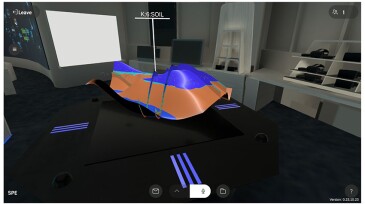
 This paper presents an immersive platform that enables multidisciplinary teams and management to make decisions, connecting professionals to demonstrate and share findings in a way that capitalizes on artificial intelligence and cognitive capabilities.
 -
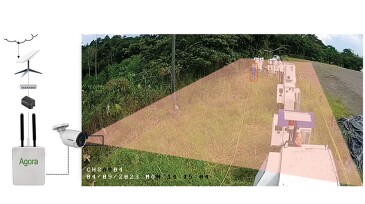
The paper showcases the digital journey of a brownfield where digital solutions are enhancing recoverable volume, production, and process efficiency while minimizing losses and maximizing the return of investment.
-
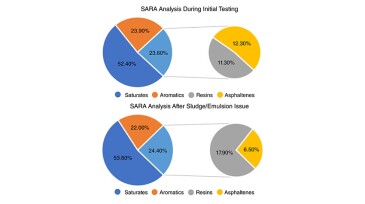
This work investigates the root cause of strong oil/water emulsion and if sludge formation is occurring within the reservoir using a robust integrated approach.
-
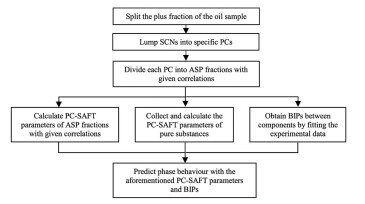
In this work, a perturbed-chain statistical associating fluid theory equation of state has been developed to characterize heavy-oil-associated systems containing polar components and nonpolar components with respect to phase behavior and physical properties.
-
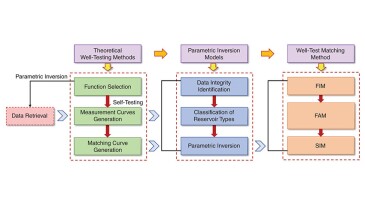
The paper describes a parameter inversion of reservoirs based on featured points, using a semi-iterative well-test-curve-matching approach that addresses problems of imbalanced inversion accuracy and efficiency.
-
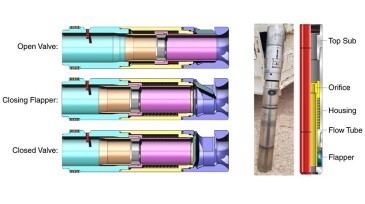
This paper aims to present thoroughly the application of subsurface safety injection valves in extremely high-temperature environments.
-
Whether it’s reviving inactive gas-condensate wells or identifying overlooked reserves in brownfields, operators are making the most of older wells and fields.
-
The authors introduce a novel framework combining dynamic mode decomposition, a data-driven model-reduction technique, with direct data assimilation to streamline the calibration of carbon-dioxide plume evolution models.
-
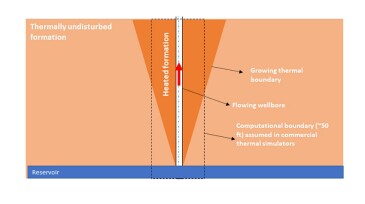
This paper outlines a technique to evaluate formation temperature shifts when closely spaced wells are produced concurrently and applies the technique to validate the design basis for new development.
-
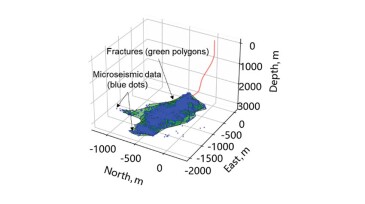
In this paper, an energy-based 3D fracture-reconstruction method is proposed to derive the complex fracture network from microseismic data in a shale gas reservoir.