

SAGD
-
 This paper uses a simulation model to evaluate and compare the thermal efficiency of five different completion design cases during the SAGD circulation phase in the Lloydminster formation in the Lindbergh area in Alberta, Canada.
 -
The complete paper provides an overview of the development of fiber-optic sensing for steam-assisted-gravity-drainage (SAGD) applications, including a review of more than 10 years of work in development and field applications in western Canada.
-
The authors discuss a new way of extracting deformation information from radar imagery, contributing to improved accuracy of InSAR surface-elevation monitoring.
-
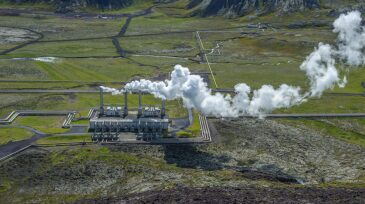
A Canadian research organization believes the country’s oilfield technology could help another energy sector drive down its costs and it may work out for heavy oil producers too.
-
Distributed temperature sensing (DTS) is the most common fiber-optic measurement used for steam-assisted-gravity-drainage reservoir monitoring.
-
An even temperature conformance along the length of the horizontal well is key in maximizing steam-assisted-gravity-drainage (SAGD) production rates.
-
Factors such as hydraulic gradients in the horizontal completion, geologic and fluid variations in the reservoir, and well-placement issues can produce very poor steam conformance in steam-assisted gravity drainage (SAGD).
-
The rapid growth of progressing cavity pumps is an example of how new uses continue to emerge for older technology.
-
The steam-assisted-gravity-drainage (SAGD) process along with an efficient steam-use process can reduce production costs and increase the oil-recovery rate. The use of real-time downhole monitoring is an effective approach to achieve this optimization.




Page 3 of 3